

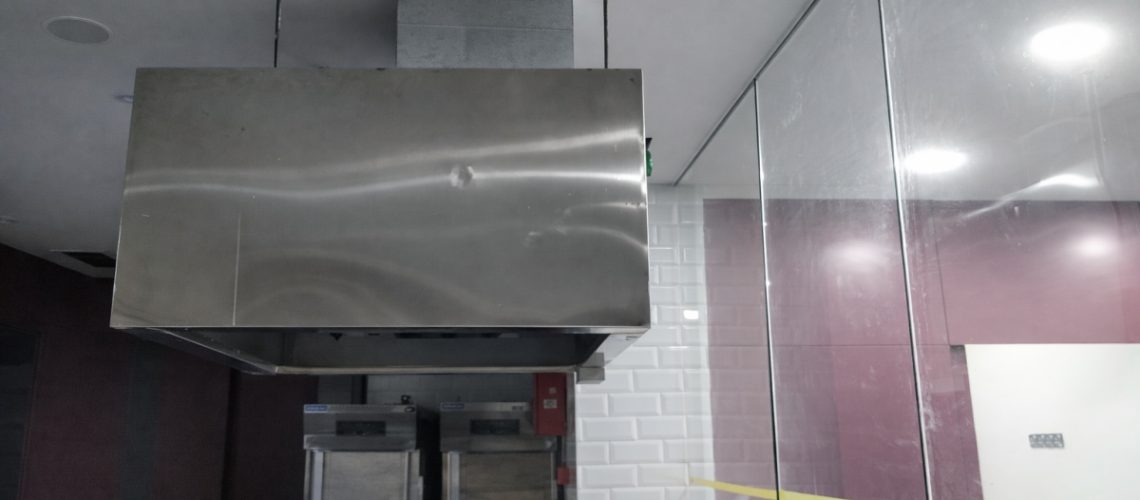
Choosing the right kitchen exhaust hood is one of the most important steps when planning a commercial kitchen. The hood must be large enough to capture smoke, grease vapour, steam and heat from the cooking equipment without allowing contaminants to spill into the kitchen.
However, the hood itself is only the capture point. Its performance also depends on the exhaust airflow, duct resistance, fan selection and replacement air available to the kitchen.
This guide focuses specifically on commercial kitchen exhaust hood selection in Malaysia — including hood type, size, material, airflow requirement, filtration, ESP consideration, installation cost and practical compliance factors.
For a broader explanation of how the hood, ducting, exhaust fan and make-up air work together as one complete system, refer to our Commercial Kitchen Exhaust & Ventilation Systems Guide.
What Determines the Right Kitchen Exhaust Hood?
A suitable exhaust hood cannot be selected based on kitchen floor area alone. The design should consider:
- Type and intensity of cooking
- Width and depth of the cooking equipment
- Whether the cooking line is against a wall or located centrally
- Hood mounting height and coverage
- Required exhaust airflow
- Grease and smoke load
- Ducting route and system resistance
- Available make-up air
- Site and building requirements
Heavy wok cooking, deep frying and charbroiling generally require stronger capture performance than light-duty cooking such as boiling or food warming.
1. Types of Commercial Kitchen Exhaust Hoods
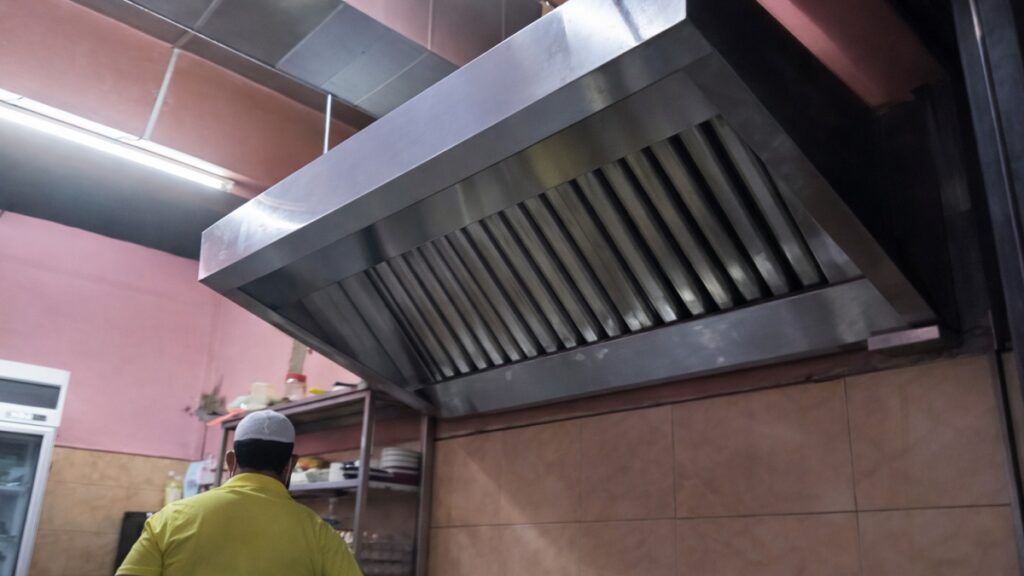
Wall-Mounted Canopy Hood
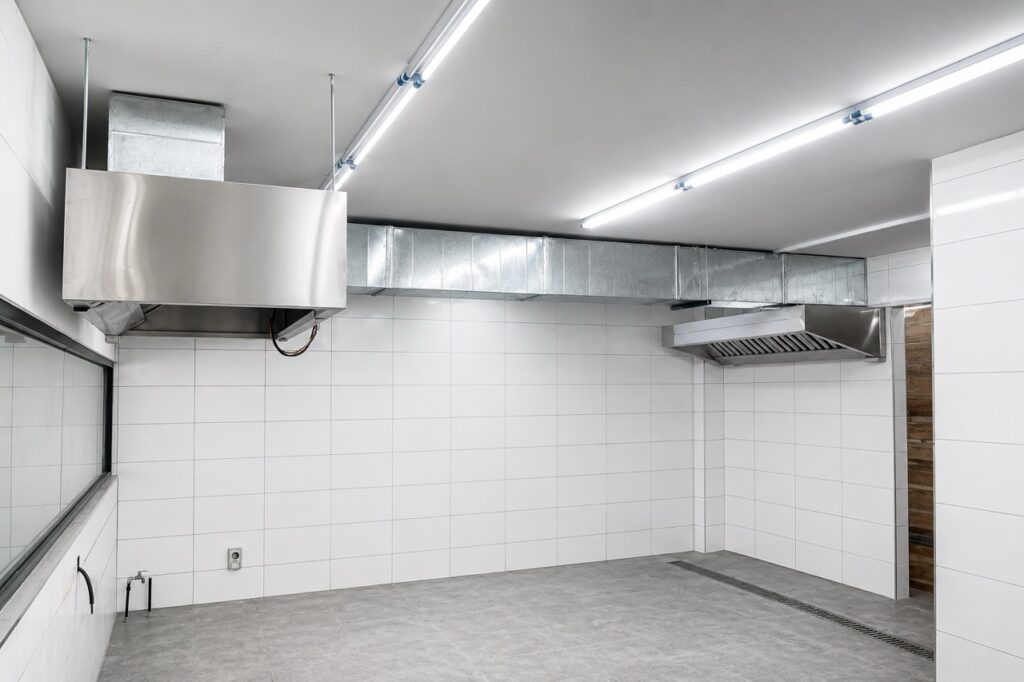
A wall-mounted hood is installed above cooking equipment positioned against a wall. This is one of the most common arrangements in restaurants, cafés and commercial kitchens because the wall helps contain the rising plume and supports effective capture.
Island Canopy Hood
An island hood is suspended above cooking equipment positioned away from surrounding walls. Because contaminants can escape from several sides, island hoods normally require greater coverage and careful airflow design.
Custom Fabricated Hood
Some kitchens have restricted ceiling height, unusual equipment arrangements or structural limitations. In these cases, the hood can be fabricated according to the actual cooking line and available installation space rather than using a standard size.
2. How to Determine Kitchen Exhaust Hood Size
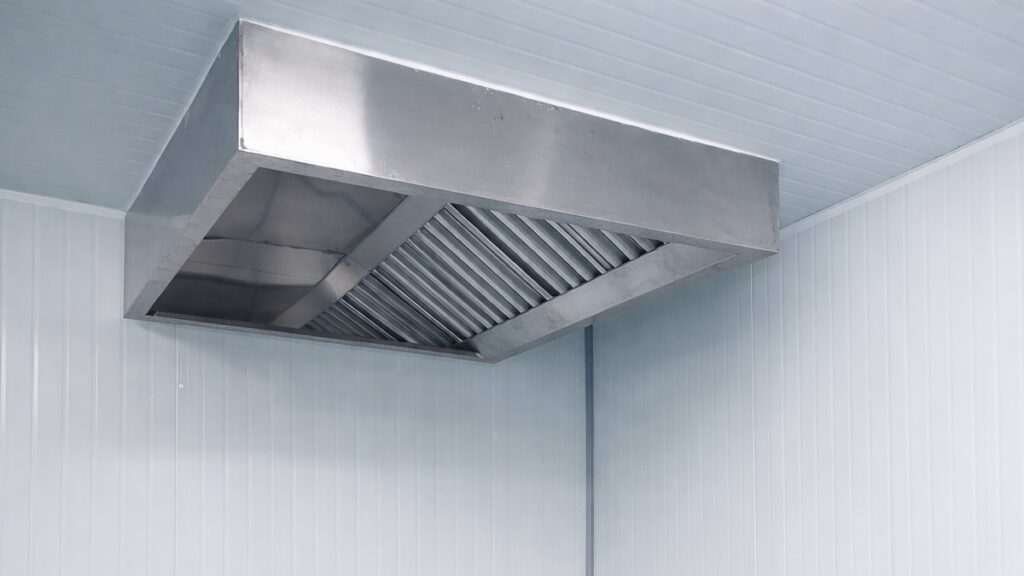
The hood should cover the complete cooking area and provide sufficient overhang around the appliances to capture smoke and heat before they escape into the kitchen.
Important sizing considerations include:
- Total width of the cooking line
- Depth of cooking appliances
- Position of fryers, wok ranges, grills and ovens
- Wall-mounted versus island installation
- Hood mounting height
- Cooking intensity
- Cross-drafts from doors, fans or supply air
A hood that is too small may allow smoke to spill beyond the canopy even when the exhaust fan is operating correctly. Increasing fan capacity alone does not always solve an undersized or poorly positioned hood.
3. Hood Airflow and Exhaust Fan Matching
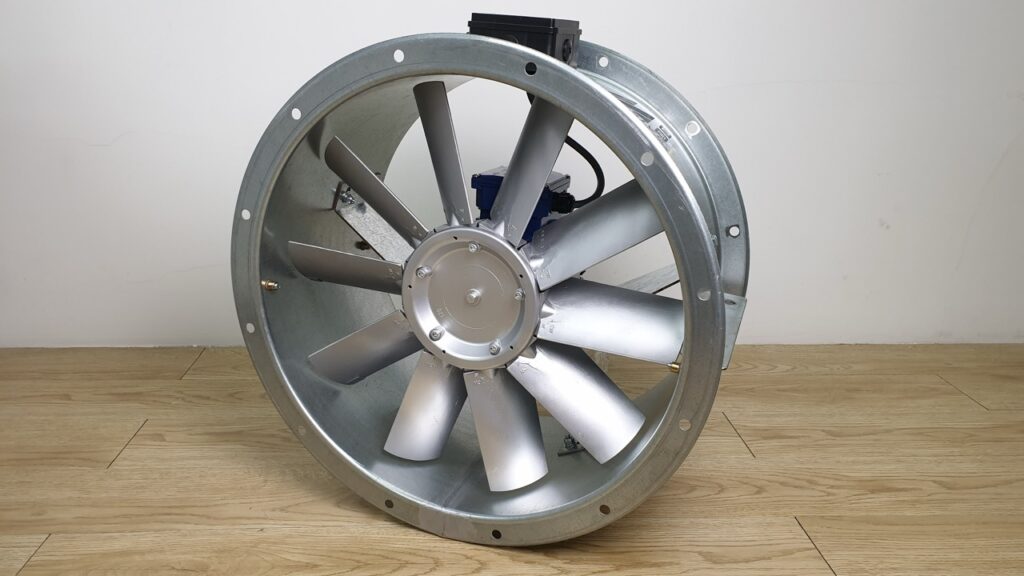
The hood and exhaust fan must be selected as part of the same airflow system. A large hood connected to an undersized fan may have weak capture, while excessive exhaust airflow can create unnecessary noise, negative pressure and energy consumption.
Actual airflow requirement depends on factors such as:
- Hood configuration
- Cooking duty
- Hood dimensions
- Duct length and number of bends
- Filters and air-treatment equipment
- Total system static pressure
For this reason, fan horsepower or hood length alone should not be used as the only basis for system selection.
For complete airflow, ducting and fan design considerations, see our commercial kitchen ventilation system guide.
4. Stainless Steel Material: SS304 vs SS201
Commercial exhaust hoods are commonly fabricated from stainless steel because it is durable, easy to clean and suitable for grease-producing kitchen environments.
Stainless Steel 304
SS304 generally offers better corrosion resistance and is preferred where long-term durability, frequent washing or exposure to moisture is important.
Stainless Steel 201
SS201 can be a more economical alternative for some applications, but its corrosion resistance is generally lower than SS304.
The most appropriate material depends on the kitchen environment, expected service life and project budget.
5. Grease Filters and Hood Maintenance Access
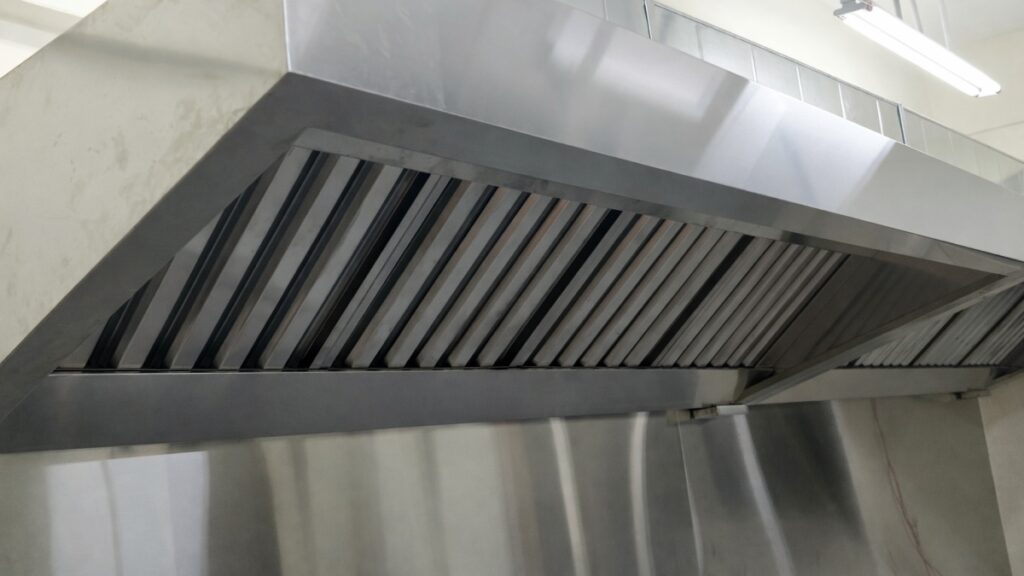
A commercial kitchen exhaust hood should include suitable removable grease filters to capture grease particles before they enter the ducting system.
Good hood design should also allow practical access for:
- Filter removal and washing
- Inspection of grease accumulation
- Internal hood cleaning
- Routine maintenance
Poor access often leads to delayed cleaning and heavier grease accumulation over time.
6. When Is an ESP Required?
An electrostatic precipitator (ESP) may be added when additional smoke or grease-particle treatment is required before exhaust air is discharged outdoors.
ESP systems are commonly considered for kitchens located in:
- Shopping malls
- Dense commercial areas
- Mixed-use developments
- Locations close to neighbouring premises
- Sites with specific building-management or discharge requirements
Whether an ESP is necessary depends on the cooking process, discharge location and requirements imposed by the building or relevant authorities. It should therefore be assessed on a project-by-project basis rather than assumed to be required for every kitchen.
7. Kitchen Exhaust Hood Cost in Malaysia
The cost of a commercial kitchen exhaust hood depends on much more than the stainless steel canopy itself.
Factors affecting project cost include:
- Hood dimensions
- Stainless steel material and thickness
- Wall-mounted or island design
- Cooking load
- Exhaust airflow requirement
- Ducting length and route
- Exhaust fan capacity
- ESP or other air-treatment equipment
- Electrical work
- Access difficulty and installation height
As a rough reference, a complete commercial kitchen exhaust hood system consisting of the hood, ducting, exhaust motor and installation may range from approximately RM4,000 to RM20,000 or more, depending heavily on the project scope and site condition.
This should not be interpreted as the price of the hood canopy alone. A proper quotation normally requires the cooking layout, hood size, ducting route and required airflow to be assessed first.
8. Compliance and Inspection Considerations in Malaysia
Commercial kitchen exhaust installations may be subject to requirements from local authorities, fire-safety authorities, building management, landlords or other relevant parties depending on the type and location of the premises.
Practical design considerations commonly include:
- Safe discharge location
- Grease containment
- Suitable duct materials
- Cleaning and inspection access
- Appropriate filtration
- Fire-safety considerations
- Kitchen hygiene and maintainability
Requirements can vary between premises, so restaurant owners should confirm the specific requirements applying to their building and business before installation.
9. Common Kitchen Exhaust Hood Selection & Installation Mistakes
Hood Too Small for the Cooking Line
If the hood does not adequately cover the appliances, smoke can escape outside the capture area even with a strong exhaust fan.
Hood Installed Too High
Excessive distance between the cooking surface and hood can weaken capture and increase the airflow required to control the cooking plume.
Exhaust Fan Selected Without Considering Duct Resistance
A fan may appear sufficiently powerful based on its nominal airflow but deliver much less airflow once long duct runs, bends, filters and other resistance are added.
Supply Air Blowing Across the Hood
Strong air movement from air-conditioning grilles, fans or make-up air outlets can disturb the rising cooking plume and push smoke outside the hood.
Poor Cleaning Access
Hoods, filters and grease ducts require routine inspection and cleaning. Designs that make maintenance difficult can lead to grease accumulation and reduced long-term performance.
10. Kitchen Exhaust Hood vs Complete Kitchen Ventilation System
The exhaust hood captures cooking contaminants at the source, but it cannot operate effectively by itself.
A complete commercial kitchen ventilation system may also include:
- Exhaust ducting
- Exhaust fan
- Grease filtration
- ESP or odour-control equipment where required
- Make-up air
- Air-balancing considerations
If you are planning the complete system rather than selecting only the hood, read our Complete Commercial Kitchen Exhaust & Ventilation Guide.
Real Kitchen Exhaust Hood Projects
Actual kitchen layout, discharge route and cooking load can significantly affect the final design. CrystalAir has completed exhaust hood and ventilation projects for restaurants, commercial kitchens and food-production facilities in Malaysia.
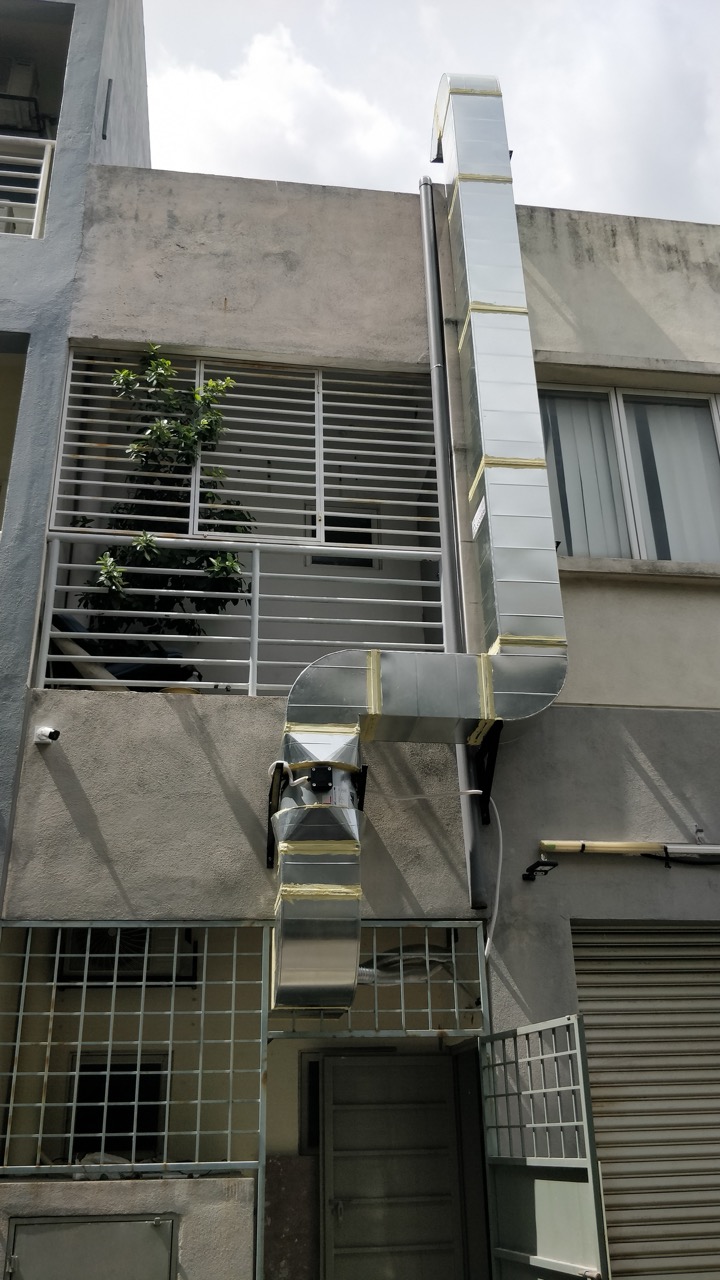
You can view our completed kitchen exhaust projects to see examples of hood fabrication, rooftop ducting, exhaust fans, silencers and make-up air installations.
Frequently Asked Questions
The hood should adequately cover the cooking equipment and provide sufficient capture around the cooking plume. The required dimensions depend on appliance size, cooking duty, mounting height and whether the hood is wall-mounted or island-mounted.
SS304 generally provides better corrosion resistance and is preferred for demanding commercial kitchen environments. SS201 can be a lower-cost option where conditions are less severe.
Possible causes include an undersized hood, insufficient airflow, excessive duct resistance, high hood mounting height, strong cross-drafts or inadequate make-up air.
No. ESP requirements depend on cooking emissions, discharge location, building requirements and local site conditions.
Cost depends on hood size, ducting length, fan capacity, filtration requirements, installation access and other site conditions. A site assessment is normally required for an accurate quotation.
Need a Commercial Kitchen Exhaust Hood for Your Restaurant?
If you are planning a new commercial kitchen or upgrading an existing exhaust hood, CrystalAir can assess the cooking layout, hood coverage, ducting route, airflow requirement and discharge location before recommending a suitable system.
For professional design and installation, visit our Commercial Kitchen Exhaust Hood System Installation page or contact our team to arrange a site assessment.