

Industrial environments generate heat, fumes, dust, and airborne contaminants that must be removed effectively to maintain a safe, productive, and compliant workspace. A properly designed industrial exhaust system is essential for factories and warehouses where heat buildup and poor air quality can affect operations, equipment, and worker comfort.
At CrystalAir, we specialise in industrial exhaust systems for factories and warehouses in Malaysia, focusing on functional design, correct airflow calculation, and long-term reliability — not generic ventilation solutions.
An industrial exhaust system is designed to extract unwanted air from factories and warehouses, removing:
Excess heat from machinery or processes
Fumes, vapours, or airborne contaminants
Dust and particulate matter
Stagnant or polluted air
Unlike comfort ventilation, industrial exhaust systems focus on air removal, not cooling. The system works by drawing contaminated air through ducting and exhaust fans, then discharging it safely outside the building.
When properly designed, an industrial exhaust system improves:
Workplace safety
Production efficiency
Equipment lifespan
Overall indoor air quality
Industrial exhaust systems are commonly required in:
Manufacturing factories
Warehouses and logistics centres
Production and assembly lines
Heat-generating industrial processes
Areas with fumes, dust, or airborne by-products
Each environment requires a custom exhaust design based on layout, airflow demand, and operational needs.
There is no one-size-fits-all solution for industrial exhaust. System design depends on heat load, air contaminants, and building layout.
Common industrial exhaust systems include:
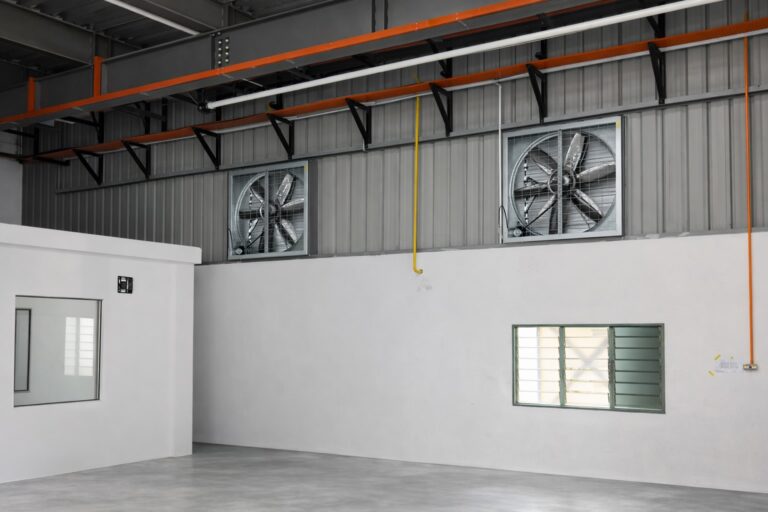
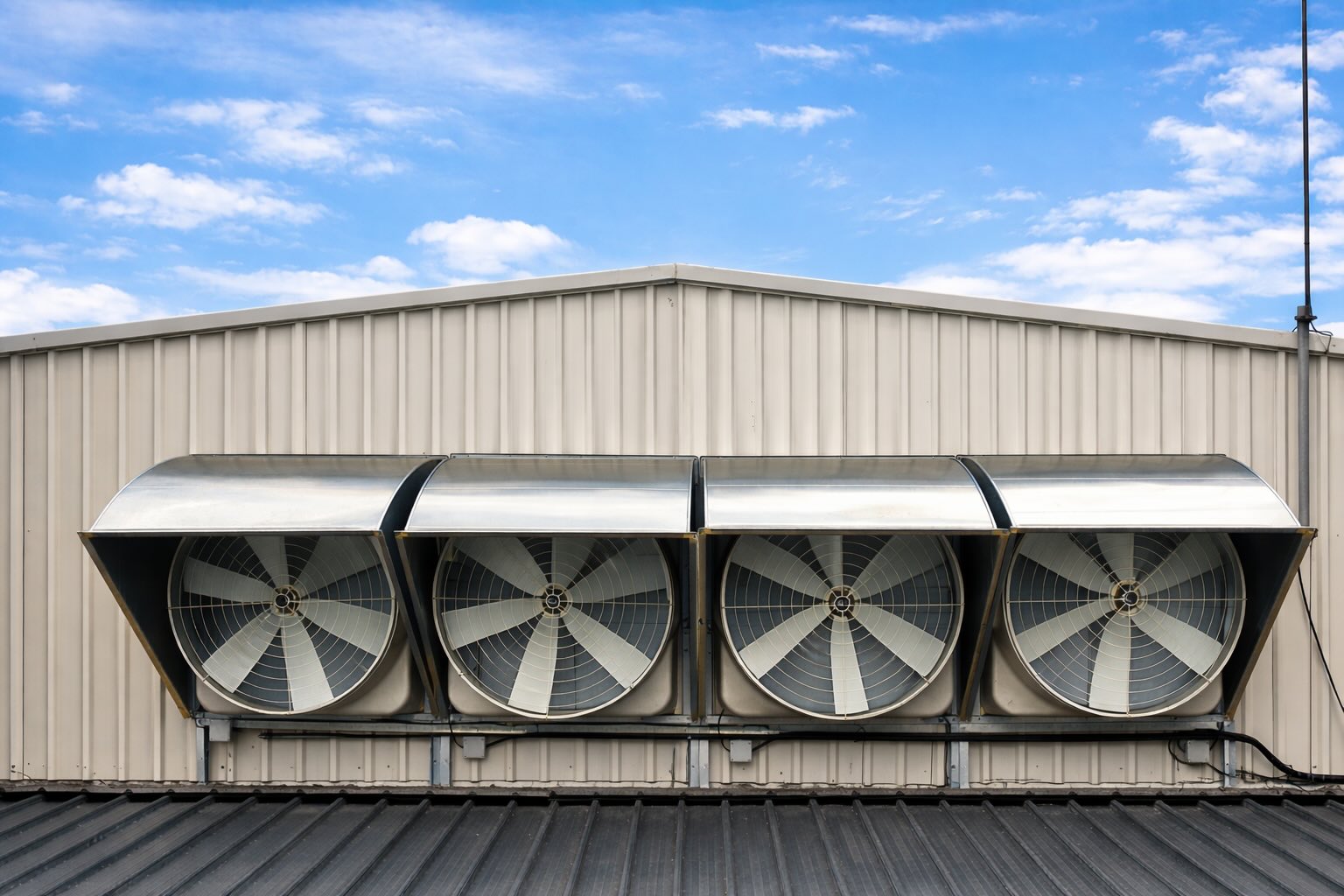
Designed to remove accumulated heat and stale air from large industrial spaces, improving overall air circulation.
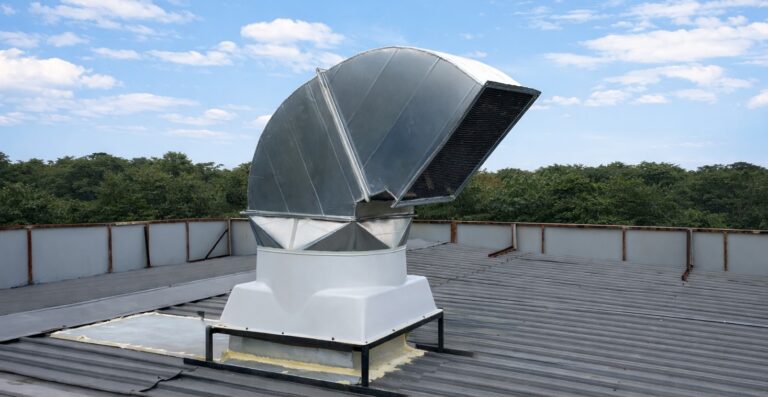
Used to discharge hot air trapped at roof level, especially in high-ceiling warehouses with poor natural airflow.
Targeted exhaust solutions for production areas where fumes, vapours, or dust are generated during operations.
Every system is engineered with proper duct sizing, fan selection, and airflow balancing to ensure effective extraction without excessive noise or energy waste.
Industrial exhaust systems and kitchen exhaust systems serve very different purposes and should not be confused.
Industrial Exhaust Systems
Used in factories and warehouses
Remove heat, fumes, dust, and industrial air contaminants
Designed for large volumes of air
Focus on airflow efficiency and durability
Kitchen Exhaust Systems
Used in commercial kitchens
Remove grease, smoke, and cooking odours
Require grease filters and fire-safety components
Governed by different compliance requirements
Kitchen exhaust systems are designed separately and are not covered on this page.
A poorly designed exhaust system can be noisy, ineffective, and costly to operate. Proper engineering is critical.
Key considerations include:
Airflow calculation (CFM) to match heat and contaminant load
Duct routing and pressure loss to ensure consistent extraction
Fan selection for efficiency, reliability, and noise control
Noise and vibration management for a safe working environment
Energy efficiency to minimise long-term operating costs
Future expansion allowance for production growth
These factors determine whether an exhaust system truly solves the problem or creates new ones.
*In facilities with high thermal loads, industrial exhaust systems may also support industrial chiller systems by improving overall heat dissipation and ventilation within the building.
Many factories and warehouses experience issues due to improper exhaust design, such as:
Hot air trapped inside the building
Fumes spreading instead of being extracted
Excessive noise from fans or ducting
High electricity consumption
Uneven airflow across production areas
These problems are often caused by incorrect airflow sizing, poor duct layout, or unsuitable equipment selection.
CrystalAir focuses exclusively on industrial-grade ventilation and exhaust solutions.
What sets us apart:
Industrial-only expertise — no residential shortcuts
Practical, site-based engineering approach
Custom exhaust system design for each project
Integration with industrial ventilation and air-cooling solutions
Focus on performance, reliability, and long-term operation
Our goal is to deliver an exhaust system that works efficiently from day one and continues to perform as your operations grow.
We follow a structured and practical approach:
Site assessment and airflow evaluation
System design and proposal based on actual conditions
Installation and system testing
Handover and operational support
This ensures the system performs as intended under real operating conditions.
Exhaust system sizing depends on heat load, air contaminants, space volume, and airflow requirements. A proper site assessment is required for accurate calculation.
Requirements depend on the type of industry and operating conditions. Proper exhaust systems are often necessary to meet workplace safety and environmental standards.
Yes. Exhaust systems are often paired with industrial air coolers to remove hot air while introducing fresh, cooled air for better overall airflow balance.
When properly designed, noise can be controlled through correct fan selection, duct design, and vibration isolation.
If your factory or warehouse is experiencing heat buildup, poor air quality, or ventilation issues, a properly designed industrial exhaust system can make a significant difference.
Industrial solutions only · No residential exhaust services
Industrial solutions only. No residential.