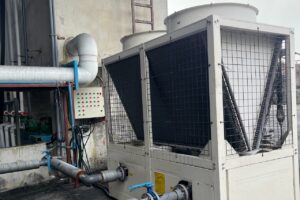

Industrial Chiller Maintenance, Overhaul & Optimisation Guide

A complete technical resource for facility managers managing industrial water-cooled chiller systems in Malaysia.

This page serves as a central knowledge hub, guiding facility managers through:

  • Preventive maintenance
  • Troubleshooting and alarms
  • Overhaul and lifecycle planning
  • Efficiency optimisation
  • Replacement decision-making

Each section below links to in-depth technical guides for deeper understanding.

*For service support, visit our Industrial Chiller page

How To Use This Guide

  • New facility managers: Start from preventive maintenance
  • Operational teams: Focus on alarms, fouling, and efficiency
  • Management & consultants: Review overhaul vs replacement and lifecycle planning


This guide is designed to support technical decisions with real operational insight.

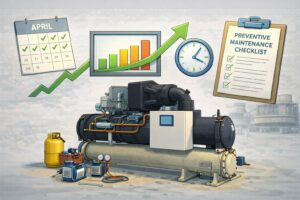
1. Preventive Maintenance: The Foundation of Chiller Reliability

A structured maintenance program helps to:

  • Prevent unplanned shutdowns
  • Detect early mechanical wear
  • Maintain stable operating conditions
  • Avoid premature compressor failure


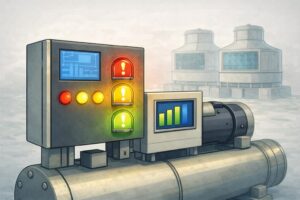
2. Chiller Alarms, Trips & Troubleshooting

Chiller alarms are protective mechanisms—not faults to ignore.
Understanding alarm causes allows facility teams to respond correctly and avoid repeated trips.

Common alarms include:
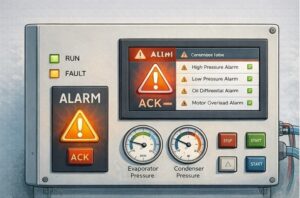
  • High condenser pressure
  • Low evaporator pressure
  • Oil differential alarms
  • Motor overload trips

Industrial Chiller Alarms, Trip and Troubleshooting

*Stay tuned! Detailed guide coming soon in April 2026

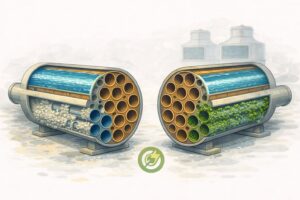
3. Heat Exchanger Fouling & Water Treatment

Evaporator and condenser fouling is a leading cause of:

  • High energy consumption
  • Compressor stress
  • Reduced cooling capacity

Even minor fouling significantly reduces heat transfer efficiency.

Proper water treatment is essential to prevent:
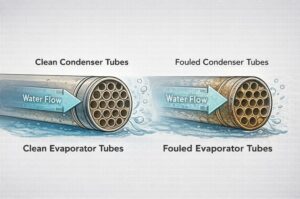
  • Scaling
  • Corrosion
  • Biofouling

Chiller Heat Exchanger Fouling

*Stay tuned! Detailed guide coming soon in March 2026

Industry standards from ASHRAE consistently highlight water quality as a core reliability factor for water-cooled chillers.

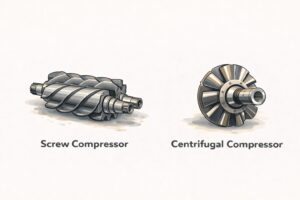
4. Compressor Types & System Understanding

Understanding compressor design helps facility managers make better decisions when faults, efficiency loss, or upgrades occur.

Key compressor types:

  • Screw compressors
  • Centrifugal compressors

Each has different:

  • Maintenance requirements
  • Operating characteristics
  • Lifecycle costs

*Stay tuned! Detailed guide coming soon in February 2026

5. Chiller Overhaul: What Really Happens

A professional chiller overhaul can extend equipment life by 8–12 years when performed at the right time.

Typical overhaul scope includes:
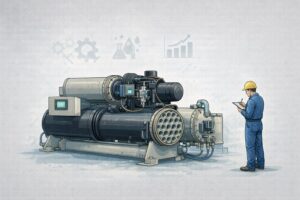
  • Compressor inspection or rebuild
  • Bearing and seal replacement
  • Oil system flushing
  • Performance recalibration

Industrial Chiller Overhaul

*Stay tuned! Detailed guide coming soon in February 2026

6. Overhaul vs Replacement: Making the Right Decision

Replacing a chiller is a major capital decision.
In many cases, overhaul or optimisation delivers better ROI.

Key decision factors:

  • Equipment age
  • Mechanical condition
  • Energy efficiency
  • Failure risk
  • Operational criticality

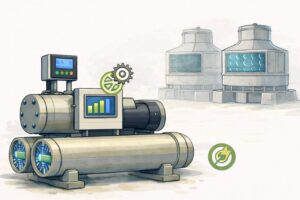
7. Chiller Efficiency & Optimisation Strategies

Many chillers still have recoverable efficiency, even after years of operation.

Optimisation may include:
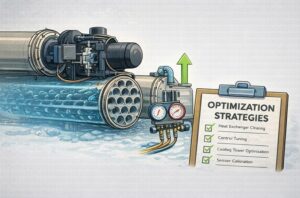
  • Heat exchanger cleaning
  • Control strategy tuning
  • Cooling tower optimisation
  • Sensor recalibration

Industrial Chiller Optimisation

*Stay tuned! Detailed guide coming soon in March 2026


8. Extending Chiller Lifespan Through Better Management

Chiller lifespan is not fixed—it is managed.

Facilities that:

  • Enforce preventive maintenance
  • Maintain water quality
  • Monitor performance trends
  • Schedule timely overhauls

…routinely operate chillers 10–15 years longer than those relying on reactive maintenance.

*Stay tuned! Detailed guide coming soon in April 2026

Need Professional Support?

If your facility is experiencing:

  • Frequent chiller alarms
  • Rising energy costs
  • Uncertainty around overhaul or replacement
  • Performance degradation


A professional inspection can identify:

  • Root causes
  • Recoverable efficiency
  • Failure risks
  • Cost-effective next steps

If you need engineering guidance for your chiller system, speak with our team.