

Evaporative air coolers are often misunderstood.
Can you put ice cubes in an air cooler? Can an air cooler really lower room temperature? Does a higher-horsepower motor mean stronger cooling? And should the windows stay open or closed while an air cooler is running?
These are common questions because an evaporative air cooler works very differently from a conventional air conditioner.
An air cooler draws warm air through water-wetted cooling pads. As water evaporates, the air temperature decreases before the cooled fresh air is supplied into the room or building. The actual cooling effect depends on temperature, humidity, airflow and ventilation.
Adding ice may temporarily make the water colder, but ice is not the main source of cooling. Likewise, a larger motor does not automatically mean a larger temperature drop, and trapping the cooled air inside a sealed room can actually reduce evaporative-cooling performance.
Below are seven common air cooler myths and practical answers, followed by guidance on what these differences mean for Malaysia’s humid climate and for larger factory or commercial applications.

Utilising the evaporation of water to cool down the air
No — not in the same way as an air conditioner.
An air conditioner uses a refrigeration system and thermostat to maintain a selected room temperature.
An evaporative air cooler does not operate this way. Its achievable discharge-air temperature depends mainly on the incoming air temperature, wet-bulb temperature, humidity, condition of the cooling pads and effectiveness of the water distribution system.
This means there is no fixed discharge temperature such as 23°C, 25°C or 27°C that can be guaranteed under every condition.
On hotter and relatively drier days, the temperature reduction can be greater. When outdoor humidity is high, the amount of additional evaporative cooling available becomes smaller because the entering air is already carrying more moisture.
ASHRAE describes the maximum theoretical direct evaporative cooling effect in relation to the difference between entering dry-bulb and wet-bulb temperatures. Actual equipment will approach only a portion of that theoretical limit.
If temperature control within a narrow range is required, conventional air conditioning or another refrigeration-based system is usually more appropriate.
Click here to know about how much an evaporative cooler can realistically lower the temperature.
Yes — in air coolers designed to accept ice or ice packs — but the effect is temporary.
Many portable air coolers include an ice compartment or allow ice packs to be placed in the water tank. Adding ice lowers the water temperature for a period of time, which may make the discharge air feel somewhat cooler while the ice is melting.</p>
However, putting ice in an air cooler does not turn it into an air conditioner and does not permanently increase the cooling capacity of the unit.
The main cooling process is still water evaporation. Once the ice melts and the recirculating water returns towards its normal operating temperature, the additional cooling effect reduces.
It can provide a short-term additional cooling effect, especially with portable air coolers, but humidity, airflow and the condition of the cooling pads have a much larger influence on overall performance.
Is Ice Necessary for an Air Cooler?
No. An evaporative air cooler does not require ice to operate. A correctly functioning unit can provide evaporative cooling using normal water alone.
No. Ice only provides temporary additional cooling while it absorbs heat and melts. Continually adding ice is not a practical way to increase the permanent cooling capacity of an evaporative air cooler.
Always follow the manufacturer’s instructions before adding ice, because not every air cooler is designed with an ice compartment.
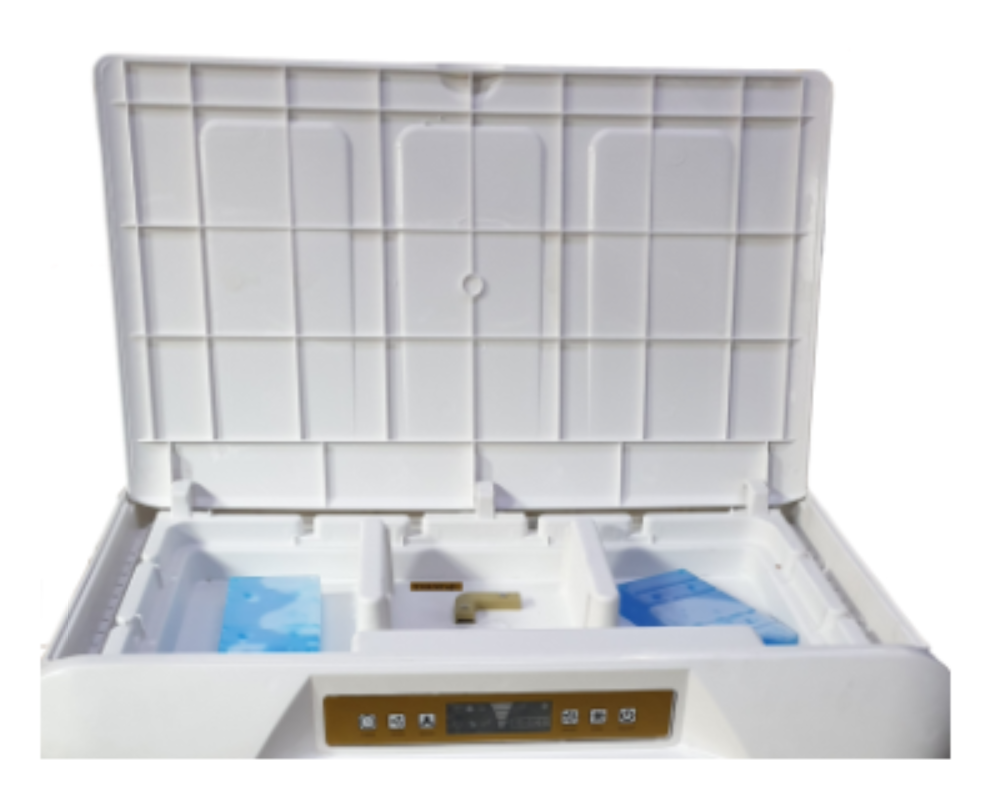
Top compartment of CrystalAir Portable
Evaporative Air Cooler PC-100 for easier loading with ice cube.
No. Horsepower alone is not a measure of air-cooler cooling capacity.
HP, or horsepower, describes motor power. A larger motor may be required to move more air or overcome greater resistance, but that does not automatically mean the air cooler will provide proportionally greater cooling.
For an evaporative air cooler, important considerations include:
For example, CrystalAir fixed-type industrial air coolers range from high-volume models designed for factory applications, while portable units provide much lower airflow for localised or temporary cooling.
For industrial applications, selecting the correct airflow and system layout is much more important than simply comparing motor HP.
Yes, some air should leave the building — and that is exactly how the system is supposed to work.
This is one of the biggest differences between evaporative cooling and air conditioning.
With air conditioning, the objective is normally to keep the conditioned air inside a relatively enclosed space and recirculate it.
An evaporative air cooler continuously supplies fresh outdoor air.
That incoming air needs somewhere to go.
The objective is therefore not to trap cold air. Instead, the system creates an airflow path:
Fresh outdoor air → evaporative air cooler → occupied area → hot indoor air → exhaust/opening → outside
The incoming cooled air replaces the hotter air already inside the building.
For factories, warehouses and workshops with significant internal heat generation, this continuous air replacement can be much more practical than attempting to refrigerate and recirculate the entire volume of air.
ASHRAE specifically notes that direct evaporative cooling applications require an appropriate exhaust path rather than continuously recirculating indoor air.
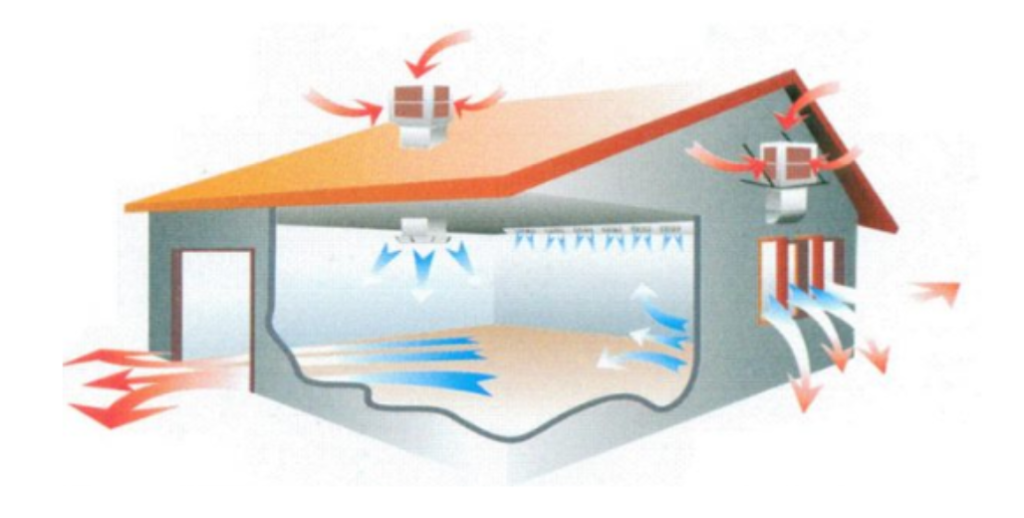
illustration of the building ventilation through Fixed Type Evaporative Air Cooler.
A Fixed Type Evaporative Air Cooler without maintenance service for 1 year.
False. Regular maintenance has a major effect on performance.
Evaporative air coolers continuously move large volumes of outdoor air through wet cooling pads. Over time, dust, mineral deposits, dirt and biological contamination can accumulate in the system.
Typical maintenance should include:
For heavily used industrial systems, servicing may be required more frequently than for lightly used commercial units.
As a general practical guide, many systems benefit from inspection or servicing every 3–6 months, but the actual interval should depend on operating hours, site dust level, water quality and equipment condition.
A poorly maintained cooler may still run, but airflow and evaporative performance can gradually decline.
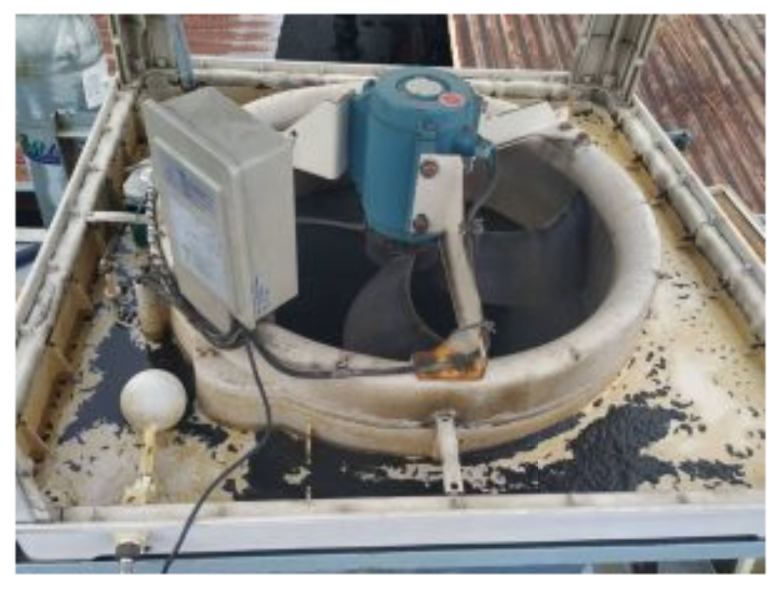
After 6 months of usage
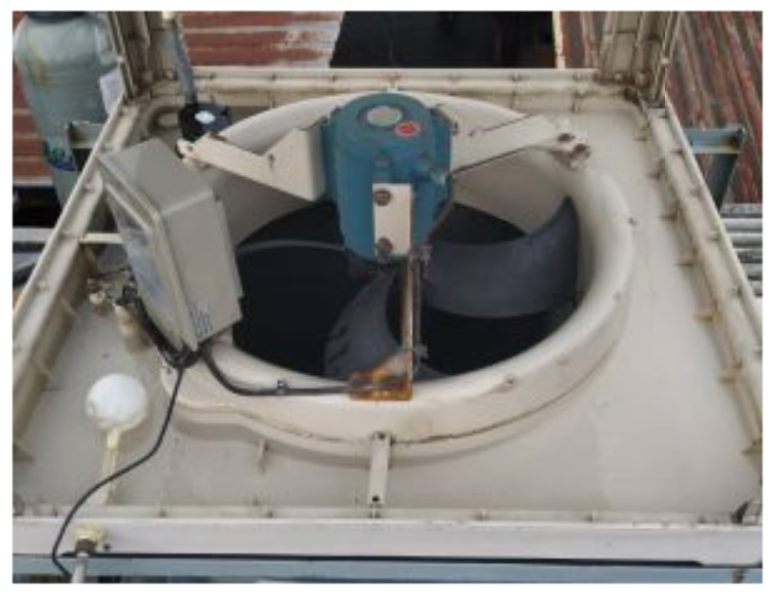
After maintenance service
Yes, but not in a completely sealed building without a planned way for air to leave.
This distinction is extremely important.
A fixed-type evaporative air cooler can be installed for an enclosed factory or production area, but continuous fresh air is being introduced into that building. The incoming air therefore requires an appropriate exhaust or relief path.
Without adequate outgoing airflow, moisture can accumulate and the cooling effect can deteriorate.
For industrial applications, exhaust fans are commonly used together with air coolers to establish a controlled airflow direction.
A properly designed system considers:
The objective is not simply to install more air coolers or more exhaust fans. The incoming and outgoing airflow should work as one complete ventilation system.
For factories with substantial heat generation, this combination can continuously supply cooled fresh air while removing heat from the production area.
However, if a building requires precise temperature and humidity control, such as certain laboratories, data rooms or controlled production environments, conventional air conditioning or another HVAC solution may be more appropriate.
Not necessarily.
The cooling pad is one of the most important components in a direct evaporative air cooler.
Its job is not simply to remain physically intact for as many years as possible. It must provide effective contact between the incoming air and water while allowing sufficient airflow through the pad.
Cooling performance can be affected by:
A cooling pad that lasts for many years but wets poorly or severely restricts airflow may not provide good evaporative performance.
Likewise, even a high-quality pad will lose effectiveness if it becomes heavily blocked by scale and dirt.
For this reason, cooling-pad selection and condition should be evaluated based on actual cooling and airflow performance, not lifespan alone.
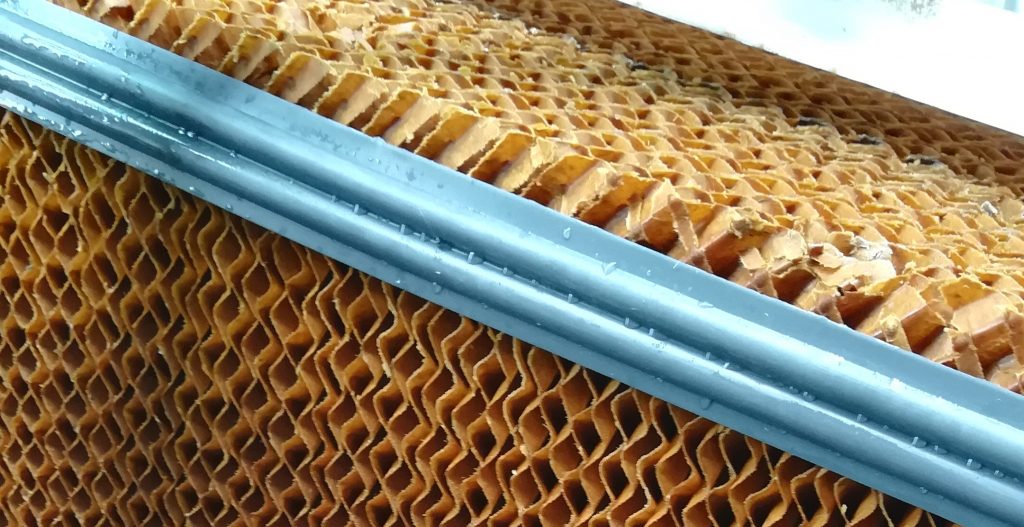
Cooling Pad: The main component that affect cooling effect of air cooler.
It can be — provided it is used for the right application and with realistic expectations.
Evaporative air cooling is particularly useful where the objective is to provide:
It is less suitable where the requirement is:
The correct question is therefore not:
“Is an air cooler better than an air conditioner?”
The better question is:
“Which cooling concept is suitable for this building and operating condition?”
Air conditioning and evaporative cooling solve different problems.
Yes, an evaporative air cooler can lower the surrounding air temperature, but the actual room temperature reduction depends on humidity, airflow, ventilation and heat load. Unlike an air conditioner, an air cooler cannot normally maintain a fixed temperature setting. It works best when fresh cooled air can enter the space while warm, humid air is allowed to escape.
Yes, depending on the factory layout, heat load, airflow requirement and ventilation design. In many factories, fixed-type industrial air coolers are combined with exhaust fans.
A portable unit needs adequate ventilation. For a fixed industrial system, the building requires a planned outgoing-air path, which may be provided by openings, exhaust fans or a designed ventilation system.
Direct evaporative cooling adds moisture to the supply air. Proper air exchange helps prevent this moisture from continuously accumulating inside the building.
No. The correct unit depends on airflow requirement, building volume, heat load, duct resistance and desired air distribution. Oversizing without proper airflow planning does not automatically produce better results.
Every factory, warehouse and commercial building has different heat loads, ventilation conditions and operating requirements.
If you are considering an evaporative air cooler but are unsure whether your building requires portable cooling, a fixed-type industrial air cooler, exhaust fans or a combined cooling and ventilation system, here is the complete evaporative air cooler guide for your digestion. Or else, CrystalAir can assess the site and propose a suitable solution.