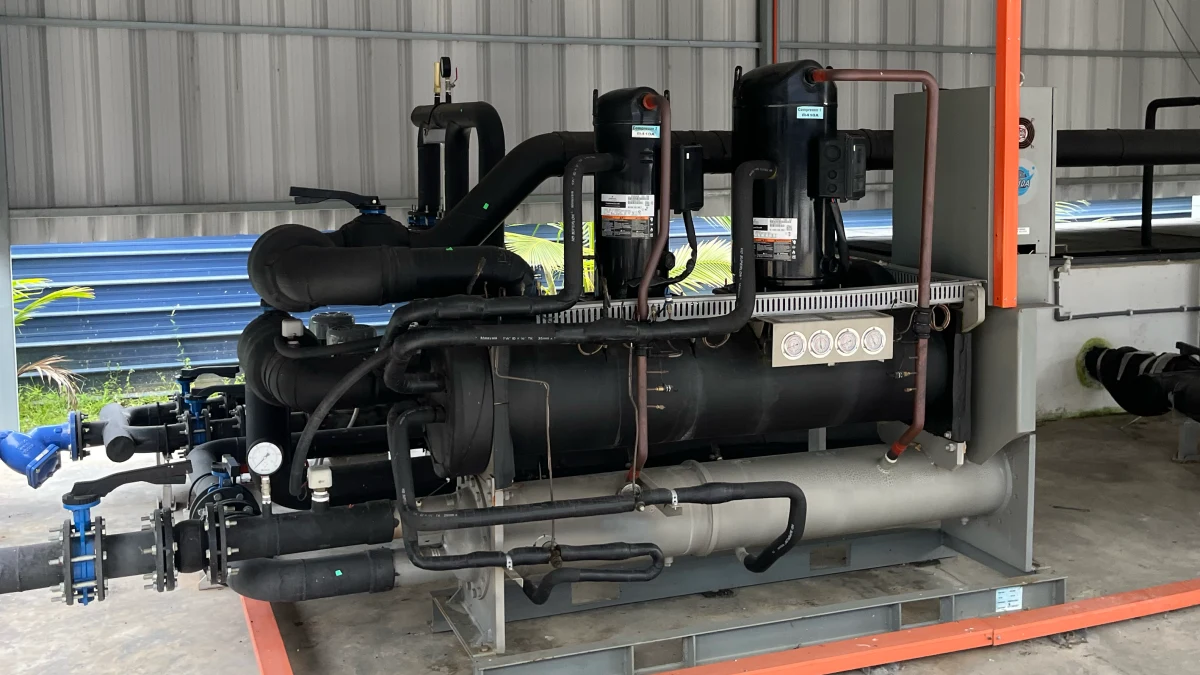
A factory contacted CrystalAir for emergency industrial chiller troubleshooting after its water-cooled chiller reported low-pressure and anti-freeze protection alarms. The equipment was still under warranty, with follow-up attendance arranged through the original installer and manufacturer.
Equipment: Water-cooled chiller with two refrigerant circuits
Initial Complaint: Low-pressure and anti-freeze protection alarms
Chilled-Water Setpoint: 18°C
CrystalAir’s Scope: Operating observations, independent temperature checks and technical handover
Important Finding: Controller temperature discrepancies and incorrect probe positioning
Warranty Follow-Up: Probe replacement and repositioning by the manufacturer
The Challenge
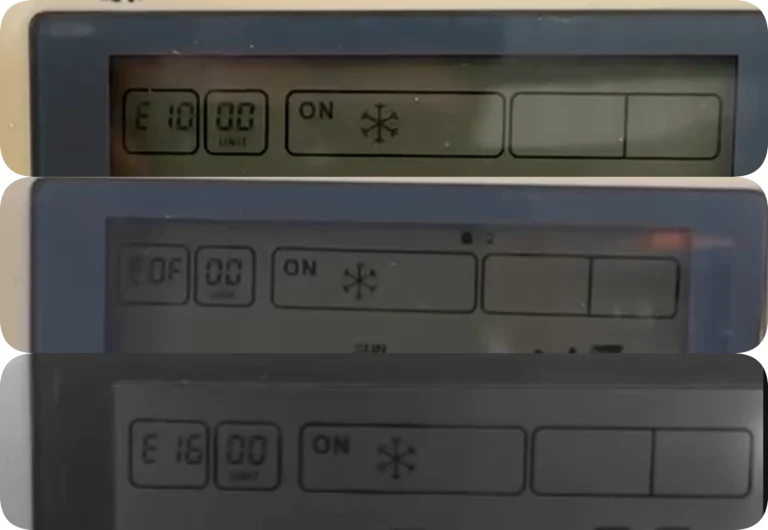
Client-provided alarm displays recorded before CrystalAir’s emergency site assessment, showing low-pressure and anti-freeze protection.
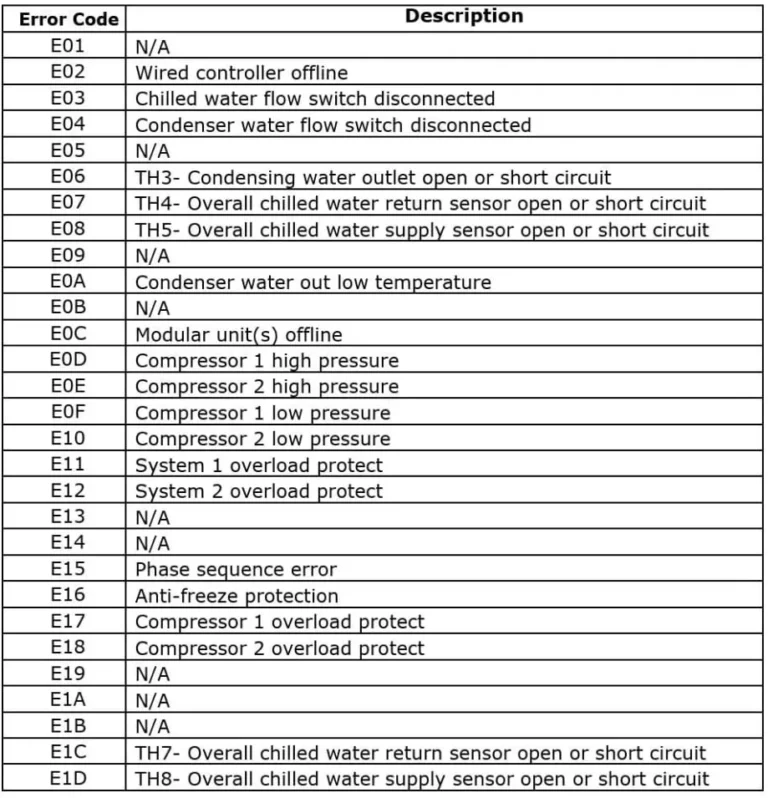
The reference table identifies E0F as compressor 1 low pressure, E10 as compressor 2 low pressure and E16 as anti-freeze protection.
The client reported that production had stopped earlier because of a machine breakdown while the chiller remained enabled. Protection alarms were subsequently discovered when production resumed.
Before CrystalAir arrived, the alarms had already been reset. The chiller was no longer displaying the reported faults, so the assessment focused on the client’s alarm photos, current operating observations and independent temperature checks.
Our Recommended Approach
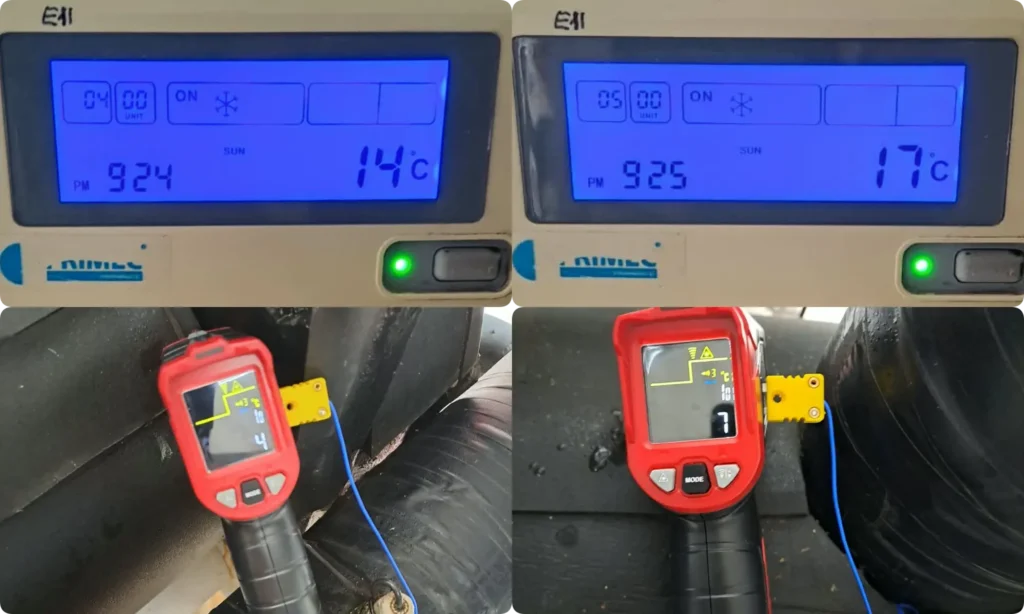
We checked the chilled-water return and supply pipes and compared independent contact-probe measurements with the temperatures displayed by the controller.
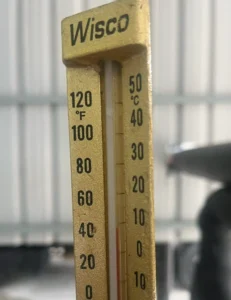
An existing thermometer on the return-water pipe provided an additional reference. These comparisons helped establish whether the displayed temperatures reflected the water conditions at the site.
The findings were documented for the manufacturer’s warranty technicians.
Temperature Checks and Recorded Findings
Independent pipe-temperature checks revealed a discrepancy with the controller readings during CrystalAir’s initial assessment.
Approximate readings recorded during the assessment included:
Measurement
Return Water
Supply Water
Controller display, using its labelled inputs
14°C
17°C
Independent contact-probe checks on the water pipes
7°C
4°C
Installed return-pipe thermometer
Around 8°C
—
The installed return-pipe thermometer indicated approximately 8°C during CrystalAir’s initial assessment, providing an additional temperature reference.
The independent pipe checks indicated that the supply water was colder than the return water. The controller displayed the opposite temperature relationship.
The installed return-pipe thermometer also agreed approximately with our return-pipe measurement, providing further evidence of a discrepancy with the controller.
These findings supported checking both the probe positions and the accuracy of the reported temperatures.
Manufacturer’s Follow-Up
During the subsequent warranty visit, the manufacturer’s technicians confirmed that the return and supply temperature probes were incorrectly positioned. CrystalAir also highlighted the discrepancy between the controller readings and the independent measurements.
The manufacturer replaced the temperature probes and installed them in the correct positions.
The subsequent site update confirmed that the controller readings agreed with the thermometer installed on the pipe.
The Key Finding
The manufacturer’s technician confirmed that compressor control was based on chilled-water supply temperature. Accurate supply-temperature feedback was therefore important to the unit’s operation.
The confirmed finding was a problem with the temperature-sensing arrangement. Replacing and correctly positioning the probes corrected the observed temperature discrepancy. This also supported the concern that incorrect feedback could have contributed to overcooling during the interruption to production.
The Result
The manufacturer’s follow-up corrected the probe positioning and brought the controller readings into agreement with the installed pipe thermometer.
CrystalAir’s emergency assessment provided independent measurements, recorded observations and a technical handover to support the warranty investigation.
This case highlights the value of verifying temperature feedback when investigating chiller protection trips, particularly when the original alarms have already been cleared.
For more information about chilled-water systems and troubleshooting, see our Industrial Chiller Guide.
Need Help With an Industrial Chiller Problem?
CrystalAir provides industrial chiller troubleshooting and site assessment support for factory cooling systems in Malaysia.
Contact our team to discuss your equipment, alarm history and operating conditions.