
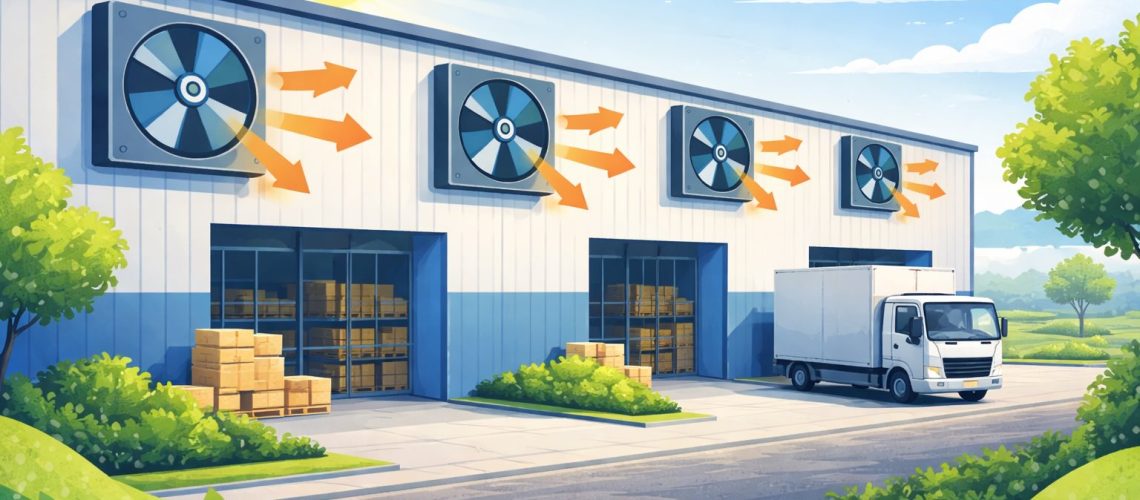
Warehouses in Malaysia often experience excessive heat buildup due to large enclosed spaces, limited natural airflow, and continuous operations. Without proper ventilation, trapped heat can affect worker comfort, reduce productivity, and even pose health and safety risks.
A properly planned industrial exhaust system for factories and warehouses plays a critical role in removing accumulated heat and maintaining healthy airflow in large warehouse environments.
Why Warehouses Trap Heat More Easily
Warehouses are structurally different from offices or retail spaces. High ceilings, metal roofing, and wide floor areas cause heat to rise and remain trapped near the roof level. During daytime operations, heat from machinery, forklifts, lighting, and outdoor solar gain accumulates faster than it can escape.
Many warehouse ventilation issues originate from poor planning during the initial system layout and airflow design stage. When exhaust points are poorly positioned or undersized, hot air circulates within the building instead of being expelled.
The Impact of Trapped Heat on Warehouse Operations
Excessive heat inside warehouses can lead to several operational challenges:
Reduced worker comfort and concentration
Increased fatigue and risk of heat stress
Lower productivity during peak daytime hours
Potential damage to heat-sensitive goods and equipment
Prolonged exposure to high temperatures may also increase absenteeism and workplace incidents, especially in physically demanding environments.
How Warehouse Exhaust Ventilation Removes Heat
Warehouse exhaust ventilation works by extracting hot air from the upper sections of the building while allowing cooler replacement air to enter from lower openings. This creates a continuous airflow cycle that prevents heat accumulation.
Common heat-removal mechanisms include:
Wall-mounted exhaust fans
Roof-mounted exhaust systems
Louver-assisted air discharge
Integration with natural or mechanical make-up air
Accurate airflow calculation is essential when determining how much hot air must be extracted from a warehouse environment.
Key Factors Affecting Heat Removal Efficiency
Several design factors influence how effective a warehouse exhaust ventilation system will be:
1. Exhaust Fan Placement
Fans must be positioned where heat naturally accumulates, typically near roof level or high wall sections. Poor placement can result in stagnant hot zones.
2. Airflow Capacity
Undersized exhaust fans cannot remove heat fast enough, while oversized systems may disrupt internal pressure balance.
3. Make-Up Air Availability
Without sufficient fresh air intake, exhaust systems struggle to maintain consistent airflow, reducing overall performance.
4. Building Layout
Racking systems, partitions, and mezzanine floors can obstruct airflow paths if not considered during system planning.
Here is the article specifically discuss on why exhaust fans fail to reduce heat.
Heat Stress and Worker Safety in Warehouses
Heat stress is a serious concern in Malaysian industrial environments. Prolonged exposure to high temperatures can lead to dehydration, dizziness, and heat exhaustion.
Because of these risks, ventilation and heat control measures are emphasised by the Department of Occupational Safety and Health (DOSH) Malaysia, particularly in workplaces involving physical labour or prolonged indoor exposure.
Proper exhaust ventilation helps regulate indoor temperatures and supports compliance with workplace safety best practices.
Best Practices for Warehouse Exhaust Ventilation Design
An effective warehouse exhaust ventilation system should be designed with long-term performance in mind. Best practices include:
Conducting site-specific airflow assessments
Balancing exhaust and make-up air volumes
Selecting durable, industrial-grade exhaust fans
Designing systems that accommodate future expansion
International references such as ASHRAE ventilation standards are often used to guide airflow rates and thermal comfort benchmarks for large industrial buildings.
When to Upgrade or Improve Warehouse Ventilation
You should consider upgrading your warehouse exhaust system if you notice:
Persistent heat even during off-peak hours
Poor air circulation near the ceiling
Rising worker complaints related to heat
Increased reliance on portable cooling equipment
Addressing heat issues early prevents long-term productivity losses and improves overall working conditions.
Conclusion
Warehouse exhaust ventilation is not just about comfort — it is a critical component of operational efficiency, safety, and workforce well-being. By understanding how heat becomes trapped and how exhaust systems remove it effectively, warehouse operators can make informed decisions that support sustainable operations.
A well-designed exhaust ventilation strategy ensures heat is removed efficiently, airflow remains consistent, and indoor conditions stay within safe limits for daily operations.