
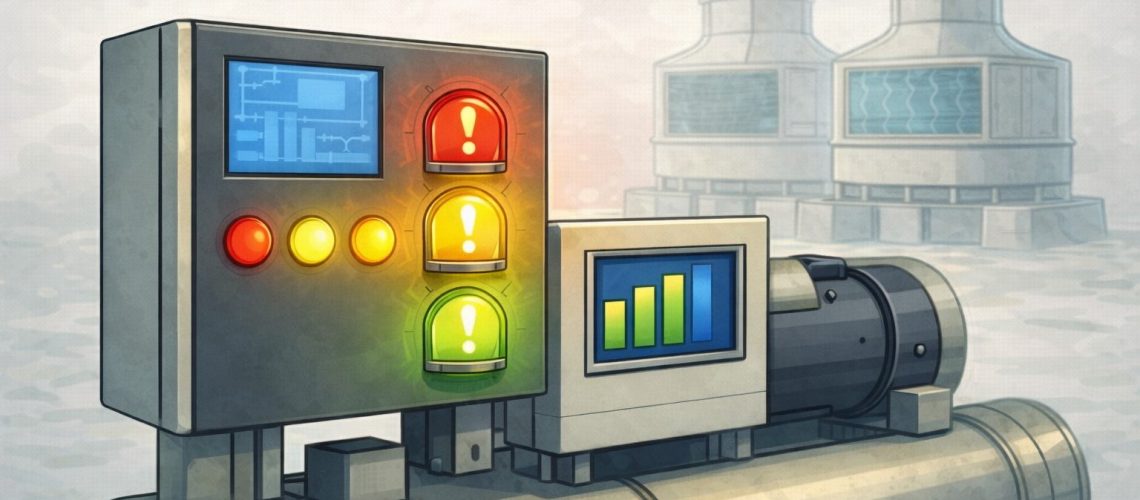
One of the crucial element of chiller maintenance best practices is when an industrial chiller trips, one must understand that it rarely happens without warning. Most shutdowns are triggered by protective alarms designed to prevent severe equipment damage.
Understanding these alarms allows facility managers to:
- Respond faster
- Avoid unnecessary downtime
- Prevent repeat trips
- Communicate accurately with service contractors
This guide explains the most common chiller alarms and trips, their causes, and what to check first.
Why Chiller Alarms Should Never Be Ignored
Chiller alarms exist to protect:
- Compressors
- Motors
- Bearings
- Heat exchangers
- Refrigerant circuits
Ignoring alarms or repeatedly resetting trips often leads to:
- Compressor damage
- Costly overhauls
- Unexpected plant shutdowns
A tripping chiller is a symptom, not the root cause.
1. High Condenser Pressure Trip
What it means
The chiller cannot reject heat effectively.
Common causes
- Dirty condenser tubes
- Poor cooling tower performance
- Insufficient condenser water flow
- High ambient temperature
- Fouled cooling tower fill
What to check first
– Cooling tower fans operating
– Condenser water pumps running
– Condenser approach temperature trending higher than normal
Do find out more on Evaporator & Condenser Fouling: Causes, Symptoms & Cleaning Methods here.
2. Low Evaporator Pressure Trip
What it means
Insufficient heat load or refrigerant flow in the evaporator.
Common causes
- Low chilled water flow
- Fouled evaporator tubes
- Incorrect chilled water temperature setpoint
- Expansion device issues
What to check first
– Chilled water pump status
– Differential pressure across evaporator
– Chilled water return temperature
3. Oil Pressure / Oil Differential Alarm
What it means
Lubrication is insufficient to protect compressor bearings.
Common causes
- Low oil level
- Oil filter blockage
- Oil pump failure
- Refrigerant dilution of oil
What to check first
– Oil level and condition
– Recent refrigerant work or charging
– Alarm history trend
Important: Repeated oil alarms can quickly lead to bearing damage.
4. Motor Overload or Electrical Trip
What it means
The compressor motor is drawing excessive current.
Common causes
- High condenser pressure
- Mechanical friction
- Electrical imbalance
- Failing motor insulation
What to check first
– Condenser pressure at trip
– Power supply balance
– Recent load changes
5. Temperature Sensor or Control Alarm
What it means
The control system is receiving abnormal or invalid readings.
Common causes
- Sensor drift or failure
- Loose wiring
- Poor calibration
- Moisture ingress
What to check first
– Compare displayed values with actual readings
– Check for erratic temperature changes
– Review recent control adjustments
Some of the problems can be avoided if we keep on improve or maintaining the efficiency of chiller.
6. Frequent or Repeated Chiller Trips
Repeated trips usually indicate an unresolved root cause.
Common patterns
- Fouling-related trips during hot weather
- Oil alarms after refrigerant leaks
- Electrical trips during peak load hours
Resetting the chiller without investigation often worsens damage.
When Alarms Indicate Deeper Problems
Some alarms are early warnings of:
- Heat exchanger fouling
- Compressor wear
- Control system instability
- Cooling tower deterioration
If alarms persist even after basic checks, a system-level inspection is required.
🔗 Internal links:
- Chiller Preventive Maintenance Checklist
- Chiller Overhaul vs Replacement
- Step-by-Step Chiller Overhaul Guide
What Facility Managers Should Document During a Trip
Before calling service, record:
- Alarm code and description
- Condenser & evaporator pressures
- Temperatures at trip
- Time and operating conditions
- Recent maintenance activity
This information reduces troubleshooting time and repair costs.
Preventing Alarm-Related Shutdowns
Best practices include:
- Routine condenser and evaporator cleaning
- Proper water treatment programs
- Control calibration checks
- Trend monitoring (ΔT, pressure, kW/RT)
- Scheduled preventive maintenance
Guidelines from ASHRAE emphasise proactive monitoring to prevent nuisance trips and equipment stress.
Conclusion
Chiller alarms are not failures — they are warnings.
Facility managers who understand alarm meanings and respond correctly can:
- Avoid emergency shutdowns
- Reduce repair costs
- Extend chiller lifespan
- Improve system reliability
The key is root cause correction, not repeated resets.
Next Step: Prevent the Next Trip Before It Happens
If your chiller is experiencing:
- Frequent alarms
- Unplanned trips
- Rising operating stress
A professional inspection can identify underlying causes before major damage occurs.