
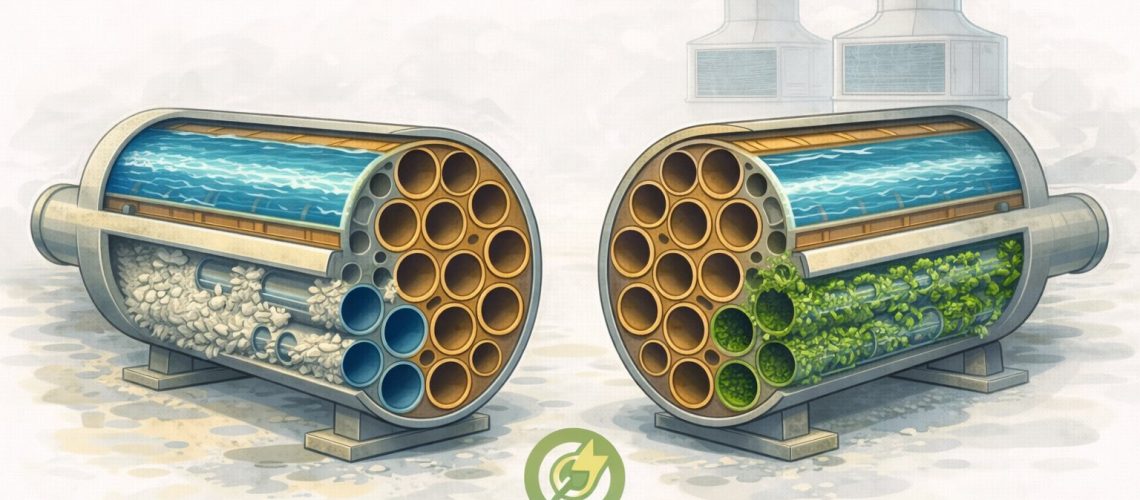
Evaporator and condenser fouling is one of the most common yet overlooked causes of chiller inefficiency, high energy consumption, and premature equipment failure. Hence, it always mentioned in any chiller maintenance or optimization guides!
In many facilities, chillers continue operating for years with degraded heat exchangers—quietly increasing electricity costs while stressing compressors and auxiliary components.
This article explains:
- What evaporator and condenser fouling is
- Why it happens
- How to detect it early
- The correct cleaning methods facility managers should apply
What Is Evaporator & Condenser Fouling?
Fouling refers to the buildup of unwanted materials on heat transfer surfaces, reducing thermal performance.
In the evaporator:
- Fouling reduces heat absorption from chilled water
- Leads to lower cooling capacity and unstable temperatures
In the condenser:
- Fouling prevents effective heat rejection
- Causes high condensing pressure and increased compressor workload
Even a thin fouling layer can reduce heat transfer efficiency by 10–30%.
Common Causes of Fouling
1. Poor Water Quality
- High mineral content (hard water)
- Improper pH levels
- Lack of water treatment control
Strongly linked to scale formation on tube surfaces.
2. Biological Growth
- Algae, bacteria, and biofilm
- Common in cooling tower condenser water circuits
Biofouling acts as an insulating layer and accelerates corrosion.
3. Sediment & Debris
- Rust particles
- Dirt and suspended solids
- Inadequate filtration or strainer maintenance
Also linked to the water quality issue.
4. Oil & Chemical Contamination
- Compressor oil carryover
- Incorrect chemical dosing
- Incompatible water treatment chemicals
Symptoms of Evaporator & Condenser Fouling
Facility managers should watch for these early warning signs:
Evaporator Fouling Indicators
- Reduced cooling capacity
- Lower chilled water ΔT
- Unstable chilled water temperature
- Increased compressor runtime
Condenser Fouling Indicators
- High condenser pressure
- Elevated condensing temperature
- Frequent high-pressure trips
- Increased power consumption (kW/RT)
Important: These symptoms are often misdiagnosed as “aging chiller problems” when fouling is the real cause.
Types of Fouling You’ll Encounter
Fouling Type | Typical Location | Risk Level |
Scale | Evaporator | High |
Biofouling | Condenser | High |
Corrosion | Both | Medium |
Sediment | Both | Medium |
Oil Film | Evaporator | Low–Medium |
Effective Cleaning Methods
1.Mechanical Tube Cleaning
Best for: Heavy fouling, scale, and debris
Methods include:
- Tube brushing
- Rotary cleaning tools
- High-pressure water jetting
✔ Effective
⚠ Requires chiller shutdown
2. Chemical Cleaning
Best for: Scale, biofilm, and mineral deposits
Process involves:
- Circulating approved cleaning chemicals
- Neutralisation and flushing
- Proper waste disposal
⚠ Must be done by experienced technicians to avoid tube damage.
3. Online Cleaning Systems
Best for: Preventive fouling control
Examples:
- Automatic tube cleaning systems (ATCS)
- Continuous condenser cleaning balls
✔ Reduces fouling buildup
✔ Extends cleaning intervals
Why Fouling Accelerates Compressor Failure
When heat exchangers are fouled:
- Compressors operate at higher pressures
- Oil temperatures rise
- Mechanical stress increases
Over time, this leads to:
- Premature bearing wear
- Seal failures
- Higher overhaul frequency
Fouling is often the hidden root cause behind expensive compressor overhauls.
Preventing Fouling Long-Term
Best Practices for Facility Managers:
- Implement proper water treatment programs
- Monitor condenser approach temperature
- Track evaporator ΔT monthly
- Schedule periodic tube inspections
- Include fouling checks in preventive maintenance plans
Related reading : Chiller Preventive Maintenance Checklist
Conclusion
Evaporator and condenser fouling is not just a maintenance issue—it is a system-wide efficiency and reliability risk.
With proper monitoring, timely cleaning, and structured preventive maintenance, facility managers can:
- Reduce energy costs
- Extend chiller lifespan
- Avoid unnecessary compressor overhauls
Early action always costs less than reactive repair.