Air Cooler Running but No Air Coming Out? Common Installation Problems to Check

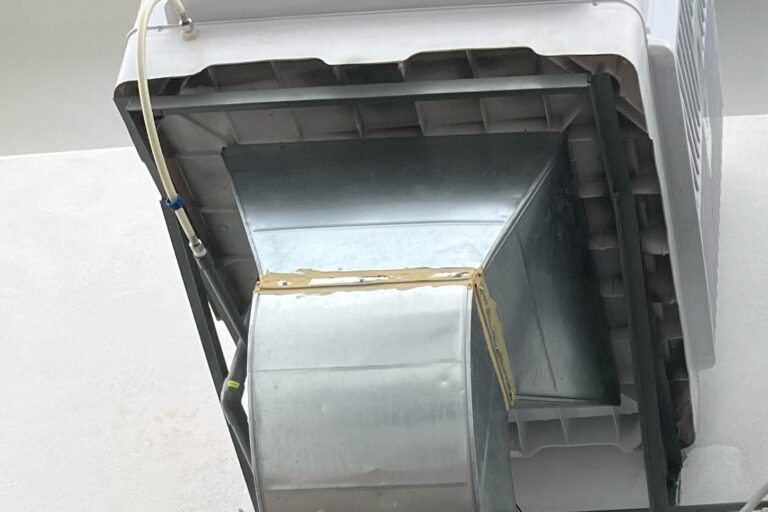
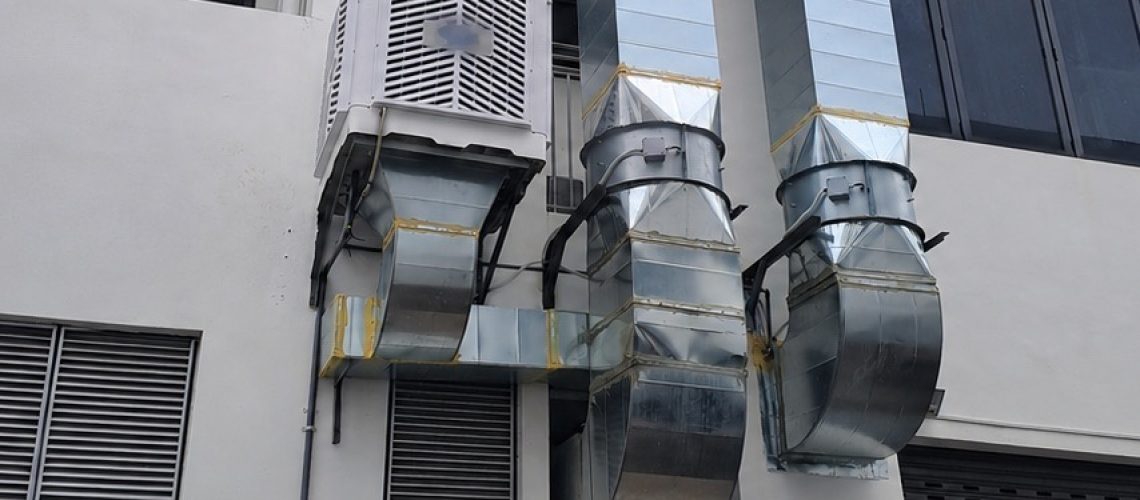
Improper air cooler ducting installation at a middle terrace shoplot

An evaporative air cooler may appear to be operating normally — the fan motor is running, the unit is switched on, and there is no obvious fault alarm — yet very little useful airflow reaches the occupied area.

When this happens, the air cooler itself is not necessarily the problem.

During a recent factory site inspection, we encountered an existing industrial air cooler where the motor was operating, but almost no meaningful airflow could be felt at ground level.

The installation highlighted an important point:

Air cooler performance depends not only on the air cooler capacity, but also on the ducting design, airflow resistance, discharge arrangement and mechanical installation.

The Problem: Air Cooler Running but Very Little Airflow

The customer reported that the existing evaporative air cooler had not been providing effective cooling.

During inspection, the air cooler fan was operating. However, the airflow reaching the working area was extremely weak.

The discharge grille was installed approximately 15 feet above floor level, making the lack of usable airflow even more noticeable.
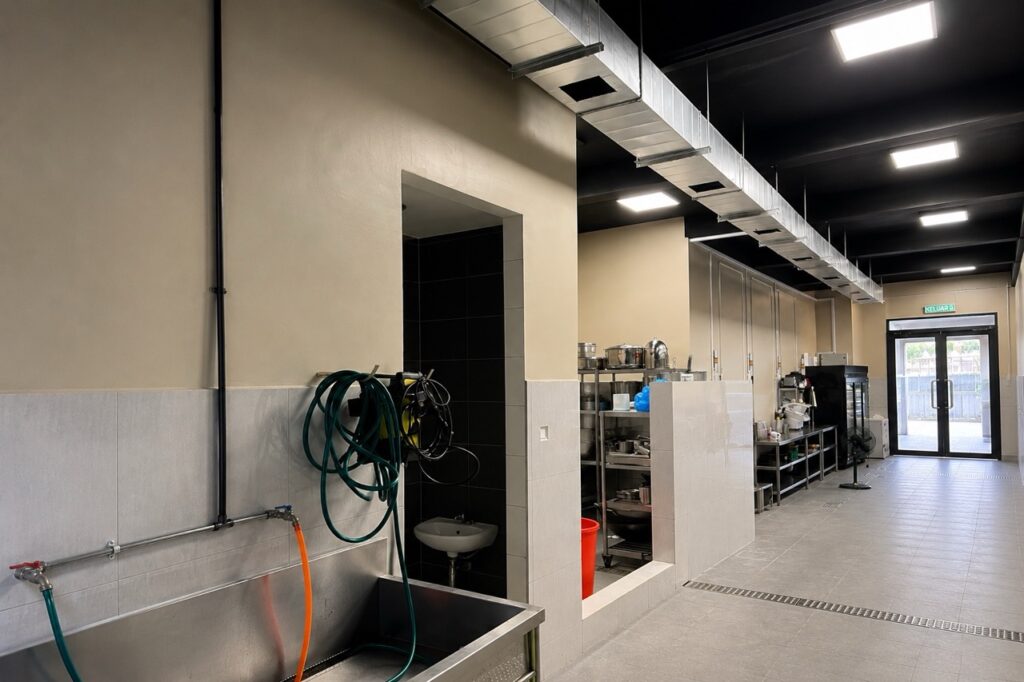
High-level air cooler ducting and discharge openings installed above the occupied working area.
The air cooler supply duct was installed high above the occupied area, where very little useful airflow could be felt at working level during inspection.

At first glance, this type of situation may lead someone to suspect:

  • a weak fan motor;
  • damaged cooling pads;
  • incorrect fan rotation; or
  • an undersized air cooler.

However, the air cooler itself was still able to operate.

The more significant problem was the air-distribution system connected to it.
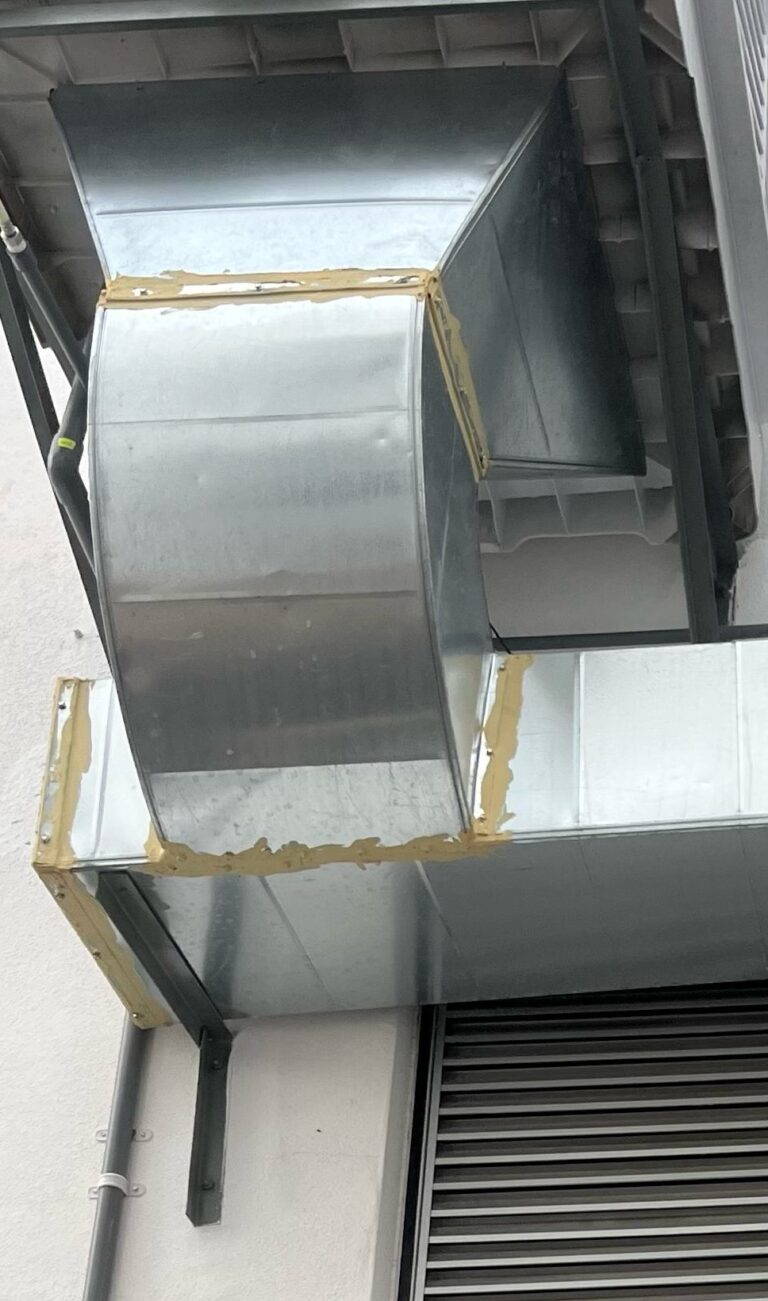
Why Poor Ducting Can Reduce Air Cooler Performance

Restrictive ducting arrangement connected directly below an industrial evaporative air cooler.
The duct arrangement directly below the air cooler includes multiple transitions and direction changes that can increase airflow resistance.

Industrial evaporative air coolers are designed to move a large volume of air. But the rated airflow of the air cooler does not mean the same airflow will automatically reach the room.

Every part of the ducting system creates resistance, including:

  • sharp elbows;
  • restrictive transitions;
  • undersized duct sections;
  • unnecessary changes in direction;
  • small discharge openings; and
  • poorly arranged fittings immediately after the air cooler outlet.


When resistance becomes too high, the fan has to work against greater static pressure. The result can be a large reduction in actual airflow delivered into the building.

In this installation, the ducting arrangement immediately below the air cooler appeared highly restrictive.

Although the fan was running, the system was unable to deliver the volume and velocity of air required at the discharge point.

Airflow Is More Important Than Simply Having Cold Air

With an evaporative air cooler, useful cooling depends heavily on air movement and air volume.

Even if the discharge air temperature is lower than the surrounding air, cooling will still be poor if only a small quantity of air reaches the occupied area.

For factory cooling, the objective is generally to continuously introduce a large volume of fresh cooled air into the workspace.

This is why an air cooler should never be selected or evaluated based only on:

“How cold is the air?”

The other important question is:

“How much air actually reaches the area that needs cooling?”

For more information on how industrial air coolers should be applied, see our industrial air cooler system

Another Serious Issue: The Air Cooler Was Not Properly Secured

During the same inspection, we identified a separate mechanical concern.

The large outdoor air cooler was sitting on its supporting bracket, but there did not appear to be proper positive restraint securing the unit to the supporting structure.

Industrial evaporative air cooler resting on a support frame without visible positive mechanical restraint.
The air cooler appeared to be resting on its support structure without visible positive mechanical restraint securing the unit in position.

Instead, the connected ductwork was effectively helping to prevent the air cooler from moving.

This is not how the ducting should be used.

An industrial air cooler can experience:

  • fan vibration during operation;
  • wind loading;
  • vibration from the supporting structure; and
  • movement during maintenance or servicing.

The air cooler should therefore be properly supported and mechanically secured according to the installation requirements.

Ductwork should carry air — it should not function as the structural restraint holding the equipment in position.

For an outdoor unit mounted at height, equipment stability becomes particularly important from both maintenance and safety perspectives.

Why Minor Modification Was Not Recommended

For this installation, simply enlarging one grille or modifying one section of ducting was unlikely to provide a reliable solution.

The problems involved the overall relationship between:

air cooler → support bracket → duct transition → duct route → discharge point

Changing only one component could leave the underlying airflow and equipment-support issues unresolved.

The recommended approach was therefore to dismantle and properly rectify the installation, including the air cooler support and major sections of the ducting system.

A rectification proposal was provided to the customer for consideration.

What Should Be Checked When an Air Cooler Has Weak Airflow?

If an industrial evaporative air cooler is running but very little air reaches the workspace, the following should be checked before automatically replacing the air cooler:

Fan operation
Confirm that the fan is running correctly and rotating in the proper direction.

Duct dimensions
Check whether the duct is appropriately sized for the required airflow.

Transitions and elbows
Look for sudden reductions, sharp bends and other highly restrictive fittings.

Discharge grille size
An undersized grille can significantly increase discharge resistance.

Static pressure
The complete duct system must remain within the fan’s available external static pressure.

Actual airflow at the discharge
Airflow should ideally be measured rather than judged only by sound or fan operation.

Equipment mounting
Check that the air cooler is properly supported and mechanically secured independently of the ductwork.

For a wider explanation of factory airflow design, you can also read our factory cooling system guide.

Air Cooler Capacity Alone Does Not Guarantee Good Cooling

One of the most common mistakes in factory cooling is focusing entirely on the air cooler model or rated airflow.

A large air cooler connected to a poorly designed duct system can perform worse than a smaller system with properly designed air distribution.

Effective industrial evaporative cooling requires the entire airflow path to work together:

Fresh air intake → air cooler → ducting → discharge grille → workspace → exhaust path

If any major part of this airflow path is excessively restrictive, the overall cooling performance can be affected.

This is also why supply-air design should be considered together with the factory’s industrial exhaust system.

Key Takeaway

If an evaporative air cooler is running but there is little or no useful airflow at the discharge point, do not immediately assume the air cooler itself has failed.

The problem may instead be caused by excessive duct resistance, unsuitable ducting arrangement, insufficient discharge area or poor system design.

For industrial applications, good cooling requires both:

sufficient cooling of the incoming air + sufficient airflow reaching the working area.

Need Help Checking an Industrial Air Cooler Installation?

If your factory air cooler is running but airflow or cooling performance is poor, CrystalAir can inspect the installation and identify whether the problem comes from the air cooler, ducting, airflow distribution or overall system design.