

Factory Cooling System Malaysia: Air Cooler + Exhaust Fan Design

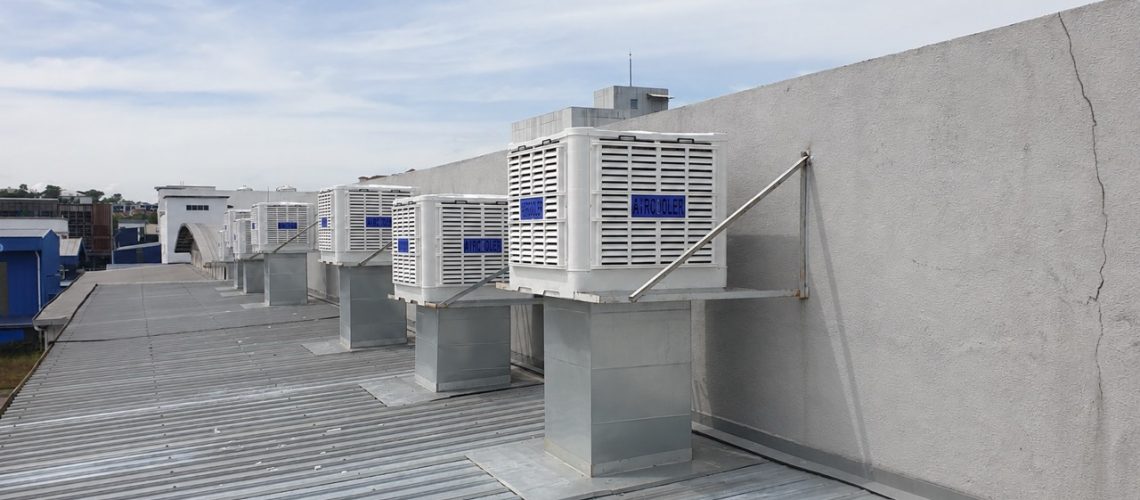
Rooftop industrial air coolers installed for a factory cooling system in Malaysia

Many factories in Malaysia face the same problem: the production floor becomes hot, stuffy and uncomfortable, especially during afternoon working hours. In many cases, the issue is not caused by one single factor. It is usually a combination of roof heat, machinery heat, poor air movement, trapped hot air and insufficient fresh air entering the building.

For large factories, warehouses and workshops, a practical factory cooling system should not only focus on blowing air into the space. It should also consider how hot air is removed from the building. This is why a combination of evaporative air coolers and exhaust fans is often used to create a more effective airflow system for industrial environments.

Why Factories in Malaysia Feel Hot and Stuffy

Factories in Malaysia are exposed to hot and humid weather throughout the year. During the day, metal roofing, concrete surfaces and enclosed production areas can absorb and trap heat. Once this heat builds up inside the building, the indoor temperature can remain high even when the outside temperature starts to drop.

Besides weather and roof heat, many factories also have internal heat sources. Production machines, ovens, compressors, welding areas, motors and process equipment can all release heat into the surrounding workspace. If this hot air is not properly removed, it will accumulate and make the working area feel hotter and more uncomfortable.

Another common issue is poor air movement. Some factories may have large doors or openings, but this does not always mean the air is moving correctly. Without a planned airflow direction, fresh air may not reach the working area, while hot air may remain trapped near the roof, corners or production zones.

Why Air Conditioning Is Often Not Practical for Factories

Air conditioning can provide strong cooling in enclosed rooms, offices and controlled environments. However, for many factory production floors, full air conditioning is often not practical due to the large space, high ceiling, frequent door opening and high heat load from machinery.

To air-condition a large factory, the building usually needs to be properly enclosed and insulated. The cooling load can also be very high, especially when there are machines, people, lighting and open roller shutters. This can result in high installation cost, high electricity consumption and higher maintenance requirements.

For factories that require fresh air movement, frequent ventilation or semi-open operation, an alternative approach is often more suitable. Instead of trying to fully air-condition the whole factory, the system can be designed to supply large volumes of fresh cooled air while removing hot air from the building.

How Evaporative Air Coolers Help Supply Cooled Fresh Air

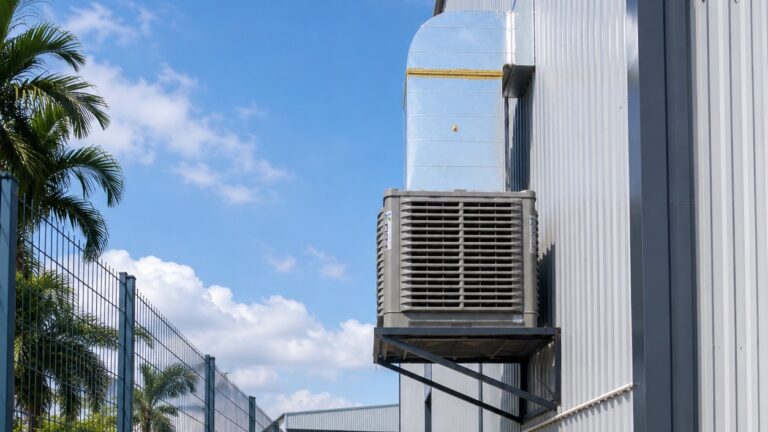
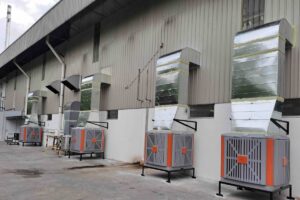
Industrial air cooler installed on the side wall of a modern factory building in Malaysia
Side-wall mounted industrial air cooler installed at a modern factory in Malaysia to supply fresh cooled air into the building.

Evaporative air coolers are commonly used in factories because they can supply a high volume of fresh air into the working area. The system draws outside air through cooling pads, where water evaporation helps reduce the air temperature before the air is delivered into the factory.

This makes evaporative air coolers suitable for many industrial applications such as factories, warehouses, workshops, production floors, loading areas and semi-open working environments. Instead of recirculating the same indoor air, the system continuously introduces fresh air into the building.

For factory applications, an Industrial air cooler system is usually designed based on the building layout, working area, heat source, ducting route and required airflow direction. The objective is not only to install the air cooler, but to make sure the cooled air reaches the correct area effectively.

In many projects, a Fixed type evaporative air cooler is installed outside the building wall or on a suitable platform, then connected to ducting and air grilles to distribute cooled fresh air into selected zones inside the factory.

Why Exhaust Fans Are Needed to Remove Hot Air

Supplying cooled fresh air into a factory is only one part of the system. The hot air inside the building also needs a proper discharge path. Without exhaust fans or suitable ventilation openings, the supplied air may not move effectively through the space.

Exhaust fans help remove hot air, stale air, fumes and trapped heat from the factory. They also help create continuous air movement from the air supply side towards the exhaust side. This airflow direction is important because it helps prevent hot air from accumulating inside the production area.

An Industrial exhaust system can be designed together with air coolers to improve overall ventilation. Depending on the site condition, exhaust fans may be installed on the wall, roof or selected discharge points to remove hot air from the building.

For factories that mainly require hot air discharge, an Industrial exhaust fan can be used to improve air extraction and reduce heat build-up inside the building. However, the exhaust fan position and make-up air source should be properly considered to avoid poor airflow performance.

For a deeper explanation, see our article on why exhaust fans are not effective when fan placement, make-up air and airflow direction are not properly planned.

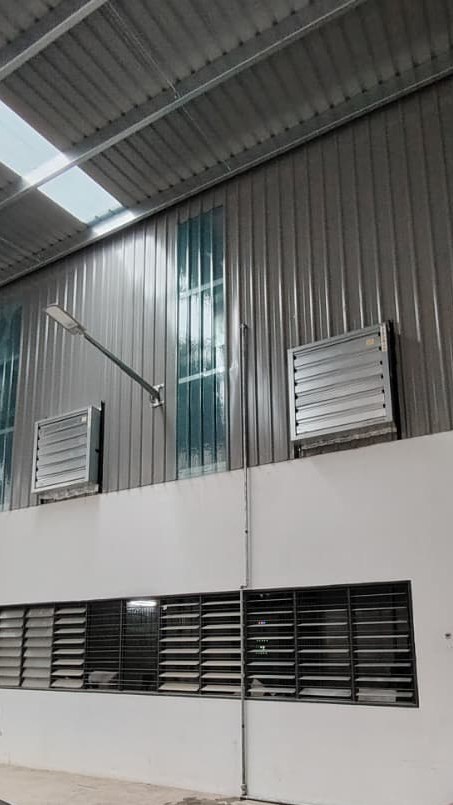
Box type exhaust fans installed on the zinc wall of a metal fabrication factory for ground floor air extraction.
CrystalAir box type exhaust fans installed on the zinc wall to support ground floor air extraction in a metal fabrication factory.

The Correct Airflow Concept: Supply Air + Exhaust Air

A good factory cooling system should have a clear airflow concept. In simple terms, fresh cooled air should enter the working area, pass through the occupied zone, and then push hot air towards the exhaust side.

This is why the combination of air coolers and exhaust fans is often more effective than using only one type of equipment. Air coolers supply fresh cooled air into the factory, while exhaust fans remove hot and stale air from the opposite side or from the upper hot-air area.
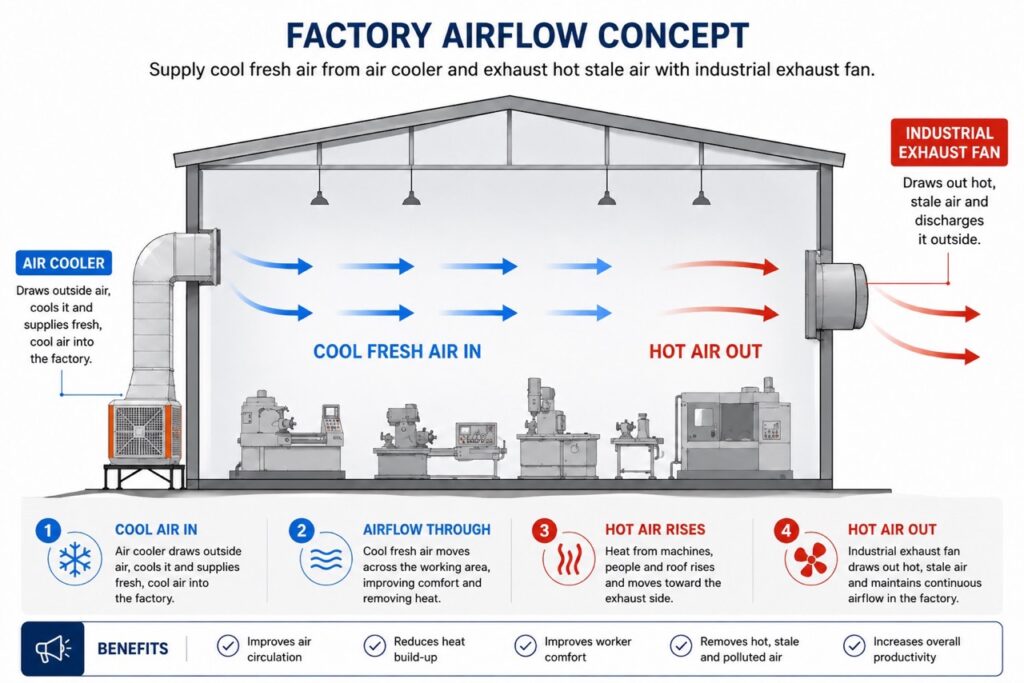
Factory airflow concept showing an air cooler supplying cool fresh air into a factory and an industrial exhaust fan removing hot air
A balanced factory cooling system uses an air cooler to supply cool fresh air and an industrial exhaust fan to remove hot air from the opposite side.

When the supply and exhaust are balanced correctly, the factory can achieve better air movement, better heat removal and better comfort for workers. The system does not work like air conditioning, but it can create a more comfortable and breathable working environment for many industrial spaces.
Common Mistake: Installing Only Exhaust Fans Without Make-Up Air

One common mistake is installing only exhaust fans without considering where the replacement air will come from. When exhaust fans remove air from a factory, new air must enter the building to replace the extracted air. This replacement air is called make-up air.

If there is not enough make-up air, the exhaust fan may not perform properly. The factory may experience negative pressure, reduced exhaust airflow, strong door resistance or poor ventilation in certain areas. In some cases, the exhaust fan is running, but the working area still feels hot and stuffy because fresh air is not entering the correct zone.

This is why exhaust fan installation should not be based only on fan quantity. The system should also consider building openings, airflow path, fan position, air velocity and where fresh air enters the factory.

Common Mistake: Installing Air Coolers Without Proper Hot Air Discharge

Another common mistake is installing air coolers without planning how the hot air will leave the factory. Evaporative air coolers work best when there is continuous air movement. If the supplied air has no proper discharge path, the air movement becomes weak and the cooling effect may be reduced.

For example, if cooled fresh air is supplied into a production floor but the hot air is trapped at the opposite side or near the roof, the factory may still feel uncomfortable. Workers may feel some cooling near the air discharge grille, but the overall area may not improve much because the hot air is not being removed efficiently.

In factory cooling design, air supply and air discharge should be planned together. The air cooler should deliver air to the correct working zone, while exhaust fans or suitable openings should help remove hot air from the building.

Example System Layout for Production Floors

A typical factory cooling and ventilation layout can be designed with air coolers supplying fresh cooled air from one side of the building or directly to selected working zones. The air is distributed through ducting and discharge grilles, depending on the factory layout and cooling requirement.

At the same time, exhaust fans are installed on the opposite side, upper wall area, roof area or selected hot-air discharge points. This allows the supplied air to move across the production floor before the hot air is extracted from the building.

For factories with specific heat sources, the system can also be designed to focus on problem areas. For example, air coolers may be used to improve worker comfort at production lines, packing areas or assembly zones, while exhaust fans are positioned to remove heat from machine areas, roof spaces or stagnant air zones.

The correct layout depends on several factors, including factory size, roof height, machine location, building opening, worker position, existing ventilation, heat source and the required comfort level. This is why a site assessment is important before deciding the final system design.

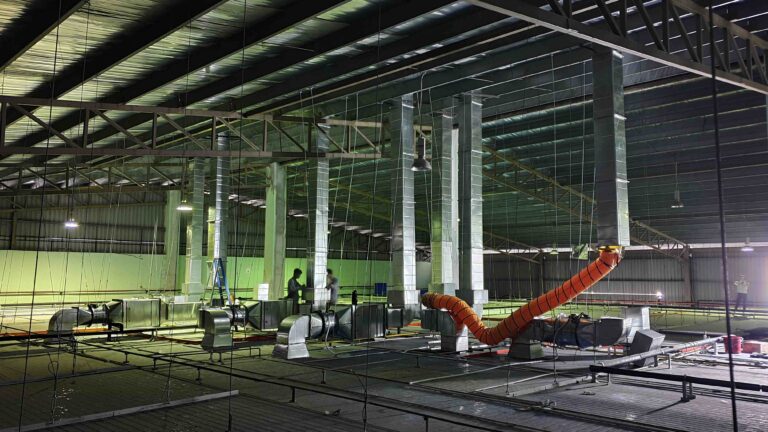
Multiple exhaust and fresh air ductings installed vertically from the top of cleanroom towards the rooftop of factory.
A complete ventilation system for food processing factory.

Related CrystalAir Factory Cooling Projects

CrystalAir has completed different factory cooling and ventilation projects involving industrial air coolers, exhaust fans, ducting, grilles and airflow planning. Each project has different site conditions, so the system design is usually customised based on the actual factory layout and working environment.

Some factories require more fresh cooled air for worker comfort, while others require stronger exhaust to remove trapped heat. In many cases, the most effective solution is a combination of both air supply and hot air discharge.

You can view some of our completed works and project examples on our Projects page.

When to Request a Site Assessment

You should request a site assessment if your factory feels hot, stuffy or poorly ventilated even when fans are already installed. A proper assessment helps identify whether the problem is caused by insufficient air supply, poor exhaust, trapped hot air, wrong airflow direction or a combination of these issues.

During a site assessment, the factory layout, working area, roof height, heat source, existing fans, door opening, ducting possibility and exhaust discharge direction can be reviewed. From there, a more suitable cooling and ventilation concept can be proposed.

For factories in Malaysia, the goal is usually not to make the entire factory feel like an air-conditioned office. The more practical objective is to reduce heat build-up, improve air movement, supply fresher air and create a more comfortable working environment for the people inside the production area.

Frequently Asked Questions (FAQ)

Air coolers can improve comfort by supplying fresh cooled air into the factory, but the result depends on the building size, roof height, heat load, airflow direction and exhaust arrangement. For large factories, the system is often designed to improve selected working zones or create better overall airflow instead of cooling the space like an enclosed air-conditioned room.

In many factory applications, exhaust fans are recommended because they help remove hot and stale air from the building. Without proper hot air discharge, the cooled air supplied by the air coolers may not move effectively through the factory.

Exhaust fans can help remove hot air, but they also require enough make-up air to enter the building. If fresh air cannot enter properly, the exhaust fan performance may be limited and some areas may still feel hot or stuffy.

No. Evaporative air cooling uses fresh air and water evaporation to reduce air temperature. Air conditioning uses a refrigeration system and usually works best in enclosed spaces. For factories, evaporative air cooling is often used when large volumes of fresh air and lower running cost are required.

Exhaust fan location depends on the factory layout, heat source, roof height, opening position and airflow direction. In general, exhaust fans should be positioned where they can remove hot or stale air effectively without short-circuiting the fresh air supply.

The best way is to assess the site condition first. A proper design should consider the factory size, working area, heat source, number of workers, existing ventilation, building openings, ducting route and whether the main objective is worker comfort, hot air removal or overall ventilation improvement.